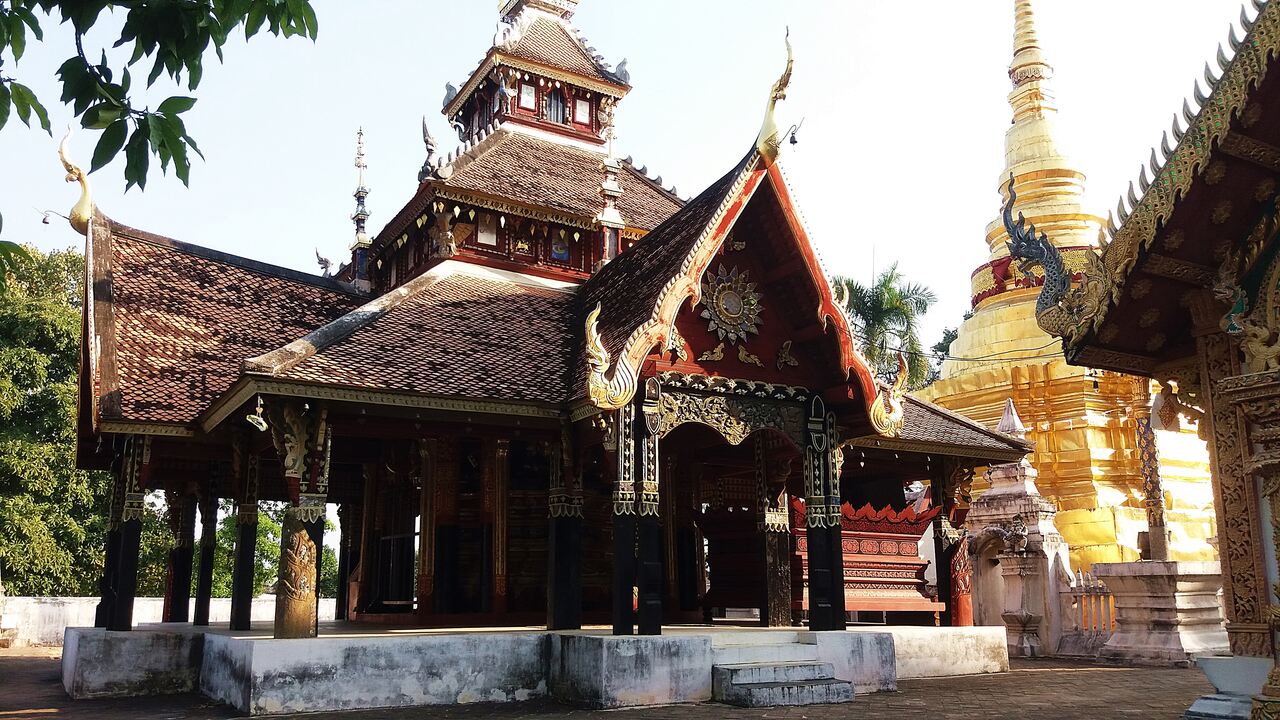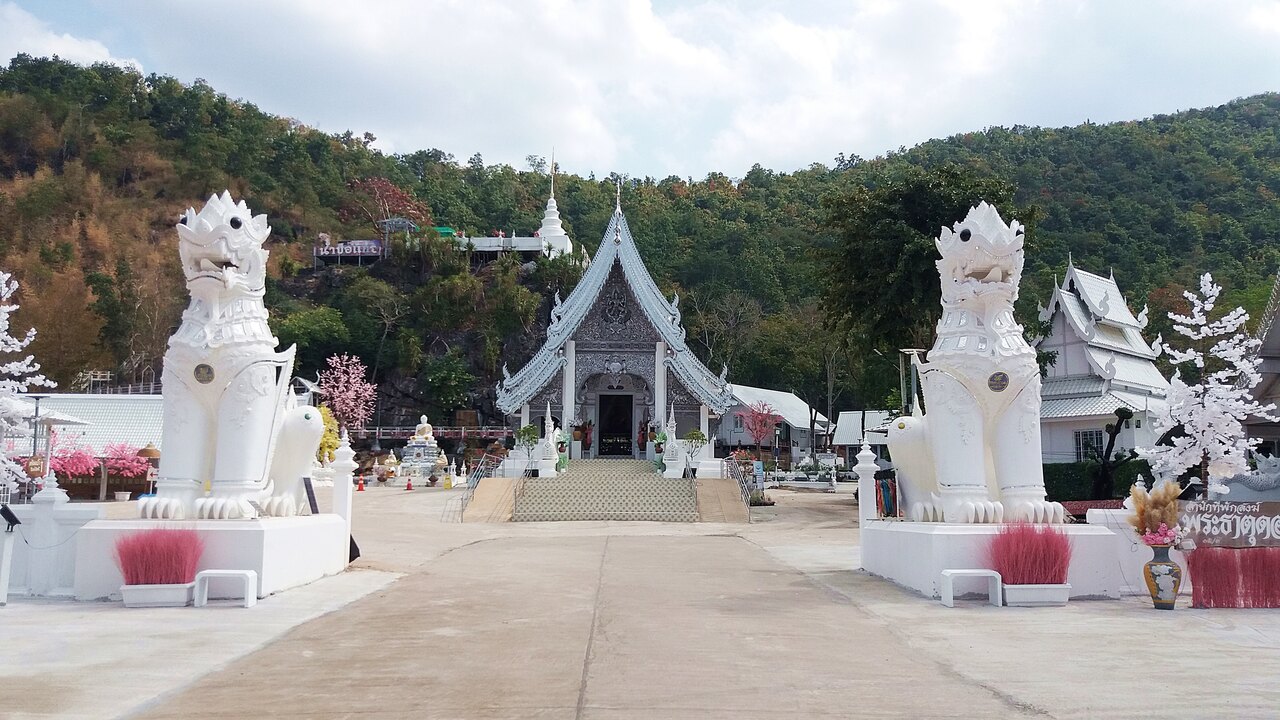


Wat Pratu Pong is a historical site in Lampang. It is here that you can see traditional temple architecture from the Lanna Kingdom period. If you are passionate about exploring old Thai temples, then do not miss this attraction.
Wat Pratu Pong – history and origin of the name
The temple got its name for a reason. Lampang was founded in the 7th century and was formerly called Khelang Nakhon. At that time, the city was surrounded by a defensive rampart, and in later centuries, walls were built.

In the 14th century, the settlement was moved to a new location, where modern Lampang is now. The city was fortified and could be entered through several gates, including Pratu Pong, from which the temple takes its name. Pratu means gate in Thai.
The origins of Wat Pratu Pong date back to 1577. The Viharn was renovated in 1866 during the reign of Chao Yan Rangsi, the ninth ruler of Lampang from the Thipphachak dynasty. At the same time, the pagoda with its characteristic black color was also built.
Wat Pratu Pong – historic buildings and objects
Lanna style Viharn
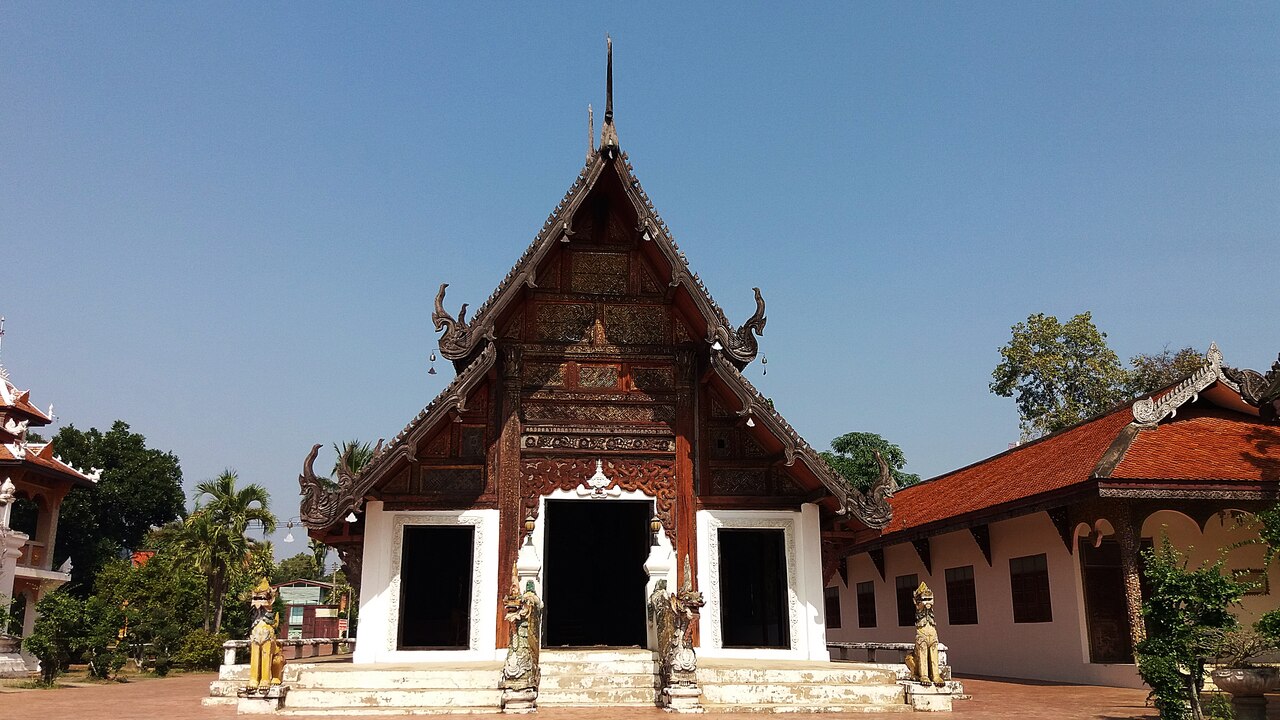
A beautiful temple in the traditional Lanna style, which is a rare sight these days. It is believed that it was previously a hall with a high-raised platform.
On both sides of the steps leading to the entrance are statues of Makara Naga. It is significant that these mythical creatures in Lanna architecture are depicted with crocodile-like mouths and have curved fangs. Hence, the name Makara Naga. Also nearby are statues of lions.
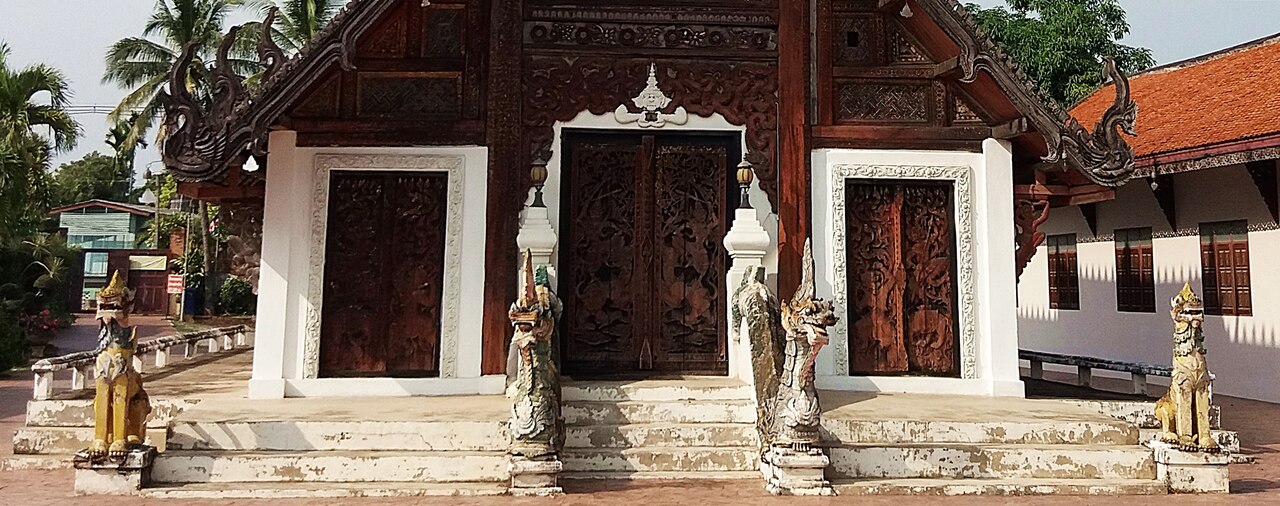
Above the central door, you can see Rahu – a Hindu demon and planetary deity. The doors feature bas-reliefs that are considered to be the finest examples of Thai temple art. The same applies to the decorations above the doors. The exact date of making these bas-reliefs is not known. It is assumed that they were created in the 19th century.
The roof has three layers, and on the edges there are carvings of Nagas, looking as if they were flowing down from the top. There are also small spires resembling teeth that are designed to prevent birds from nesting, which could damage the roof.
The top of the Viharn at Wat Pratu Pong is decorated with Chinese auspicious patterns. They were made by Chinese craftsmen from Xishuangbanna Province.
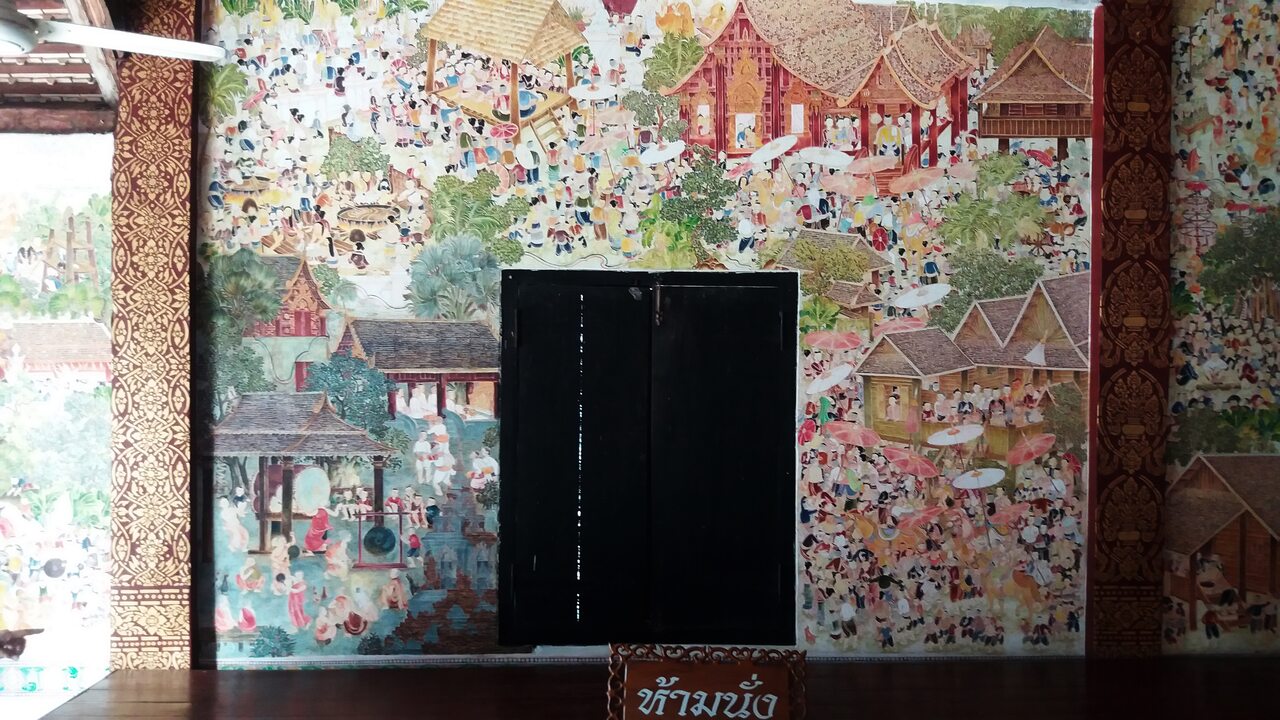
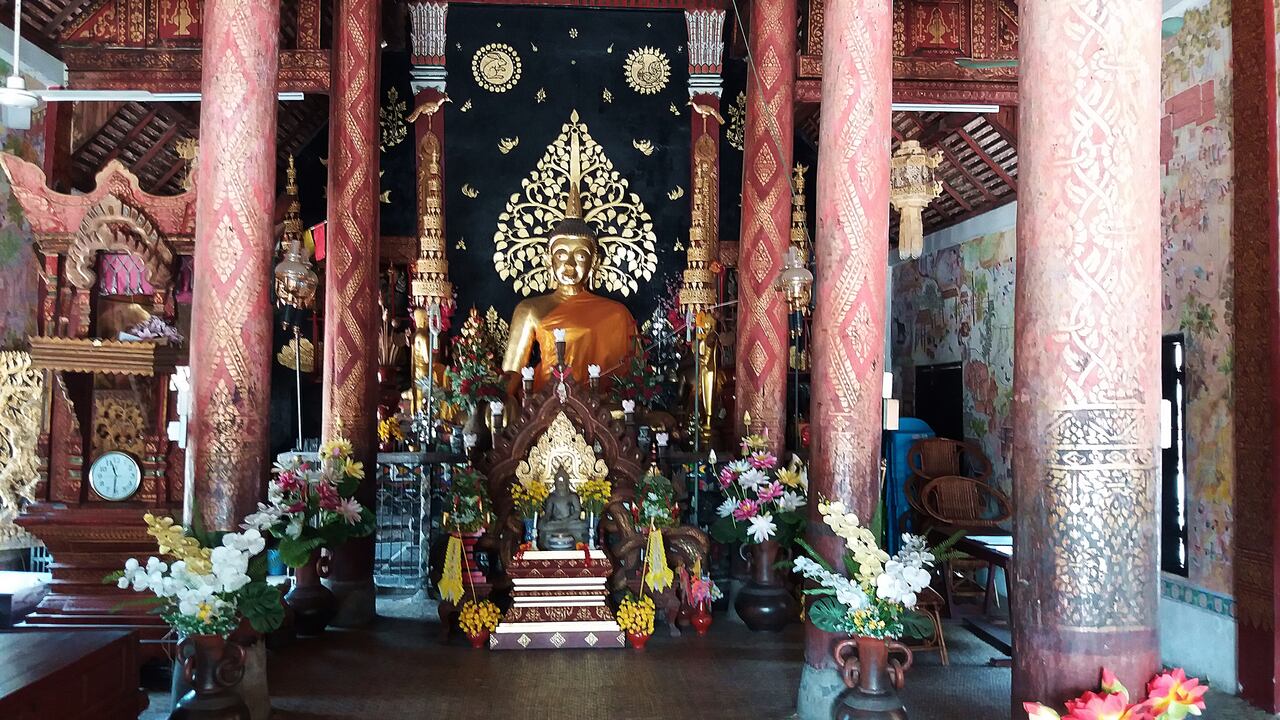
Inside the building, there is a statue of Buddha, and behind it, you can see the sacred Bodhi tree in gold on a black background. On the walls, there are elaborate paintings depicting the life and traditions of the people of Lampang.
Ubosot
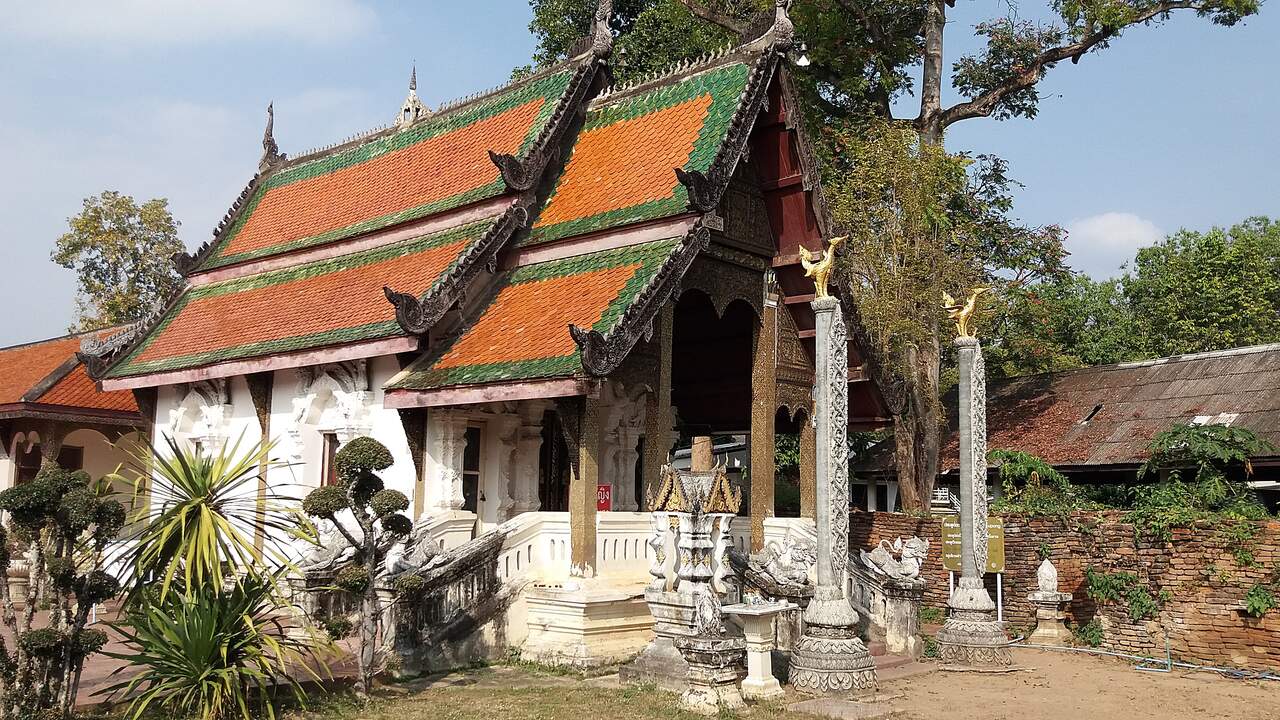
Next to the Viharn is the Ubosot (Ordination Hall). It is another important building in Wat Pratu Pong.
In front of the entrance are columns with decorative patterns and images of swans. Unlike the adjacent Assembly Hall, the front of the Ubosot is decorated with stucco carvings, and the black doors have gold stencils.
There is also a small shrine with an image of Phra Upakut at the Ordination Hall. According to beliefs, he is an arahant endowed with the great power of the Buddha. Thanks to this, he can tame evil that could enter the temple and destroy important ceremonies.
Unfortunately, women are not allowed to enter this building.
Chedi
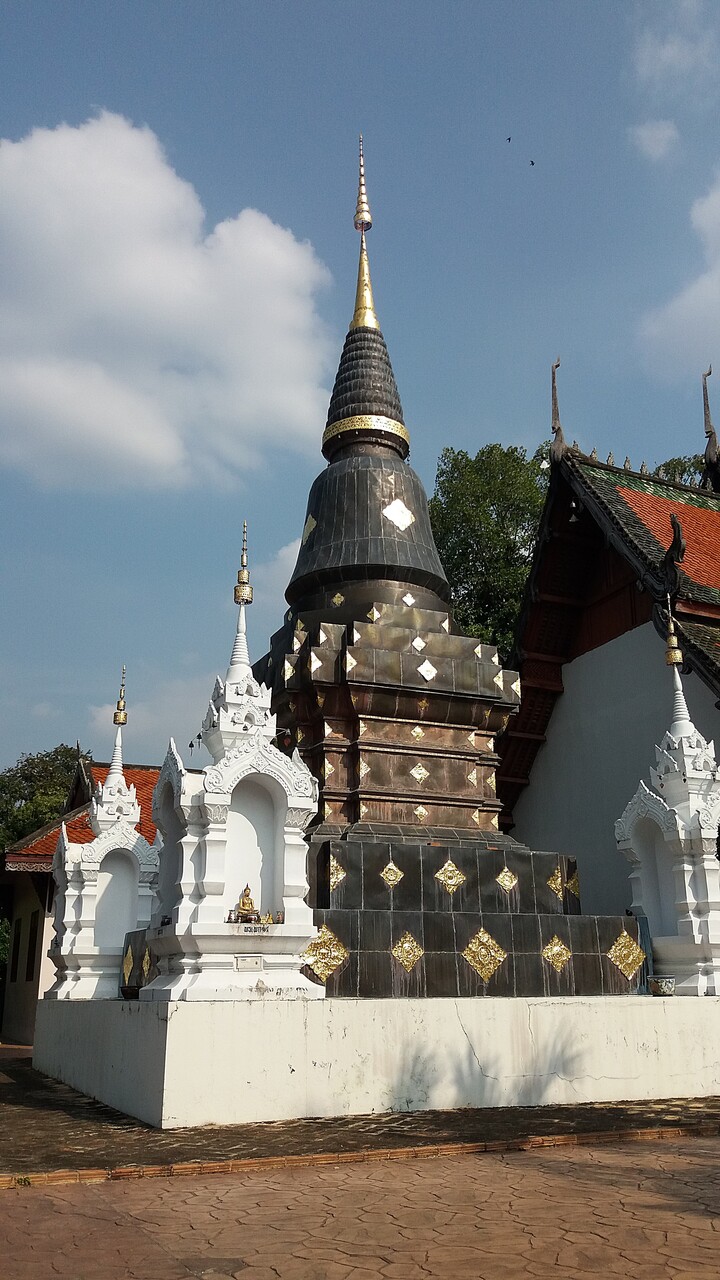
The pagoda is an unusual sight due to its aforementioned black color. It resembles Sri Lankan stupas.
The chedi is covered with tiles, which add to its unusual appearance. The exterior of the structure is covered with brass.
Ho Trai
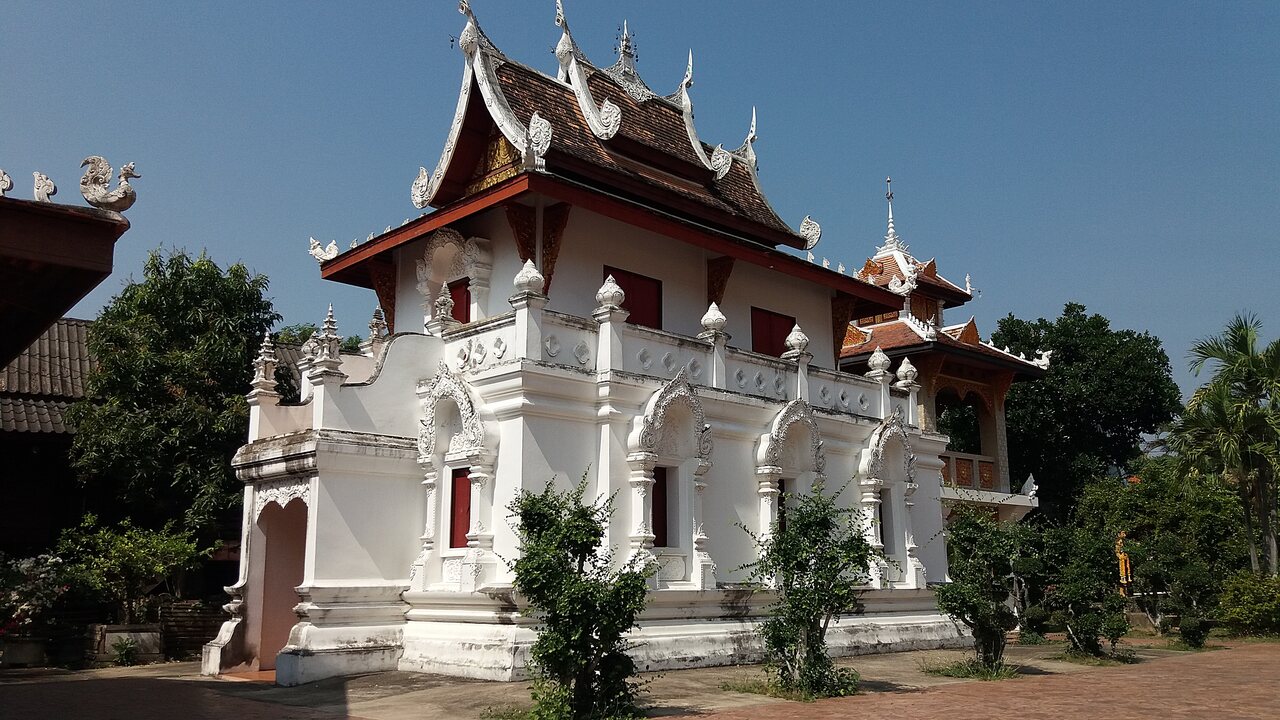
This is a library that houses the sacred Buddhist scriptures known as the Tripitaka. The Ho Trai is reminiscent of the classical style of Lanna temple libraries, although it is a relatively new building.
Drum Tower
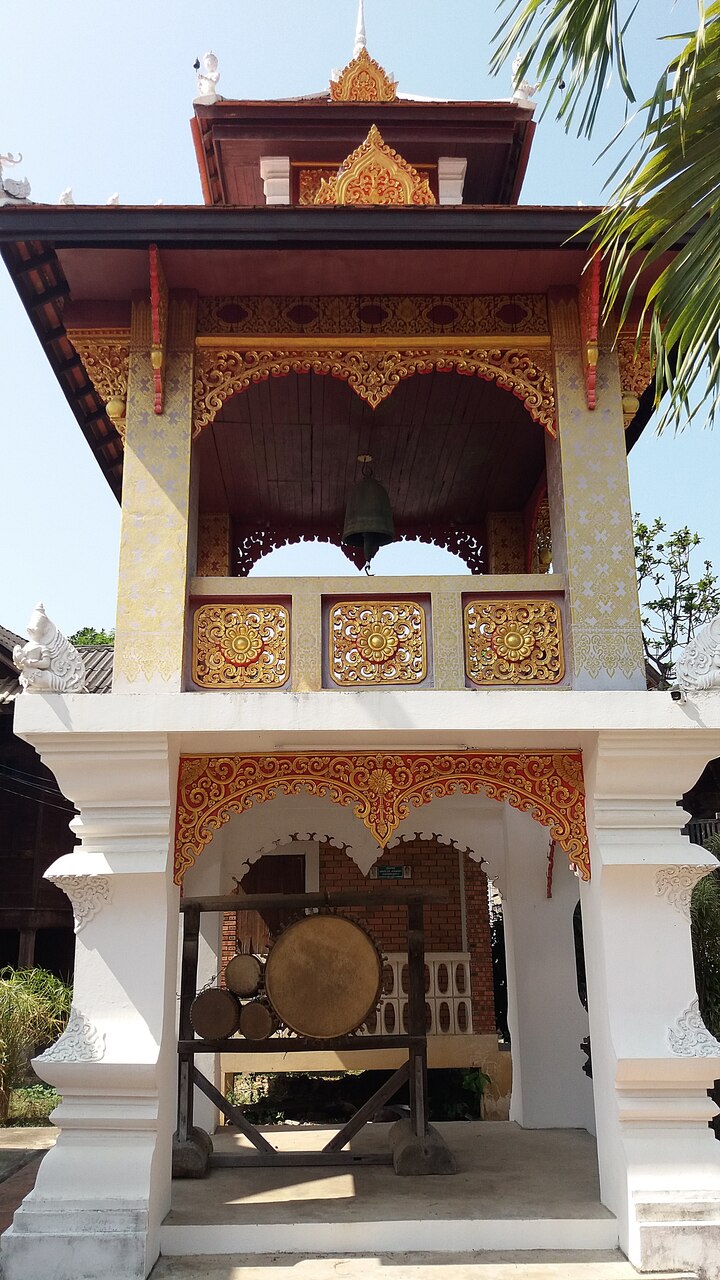
Another newer structure. The architecture resembles other similar drum towers in northern Thailand and Laos.
Ancient city gate
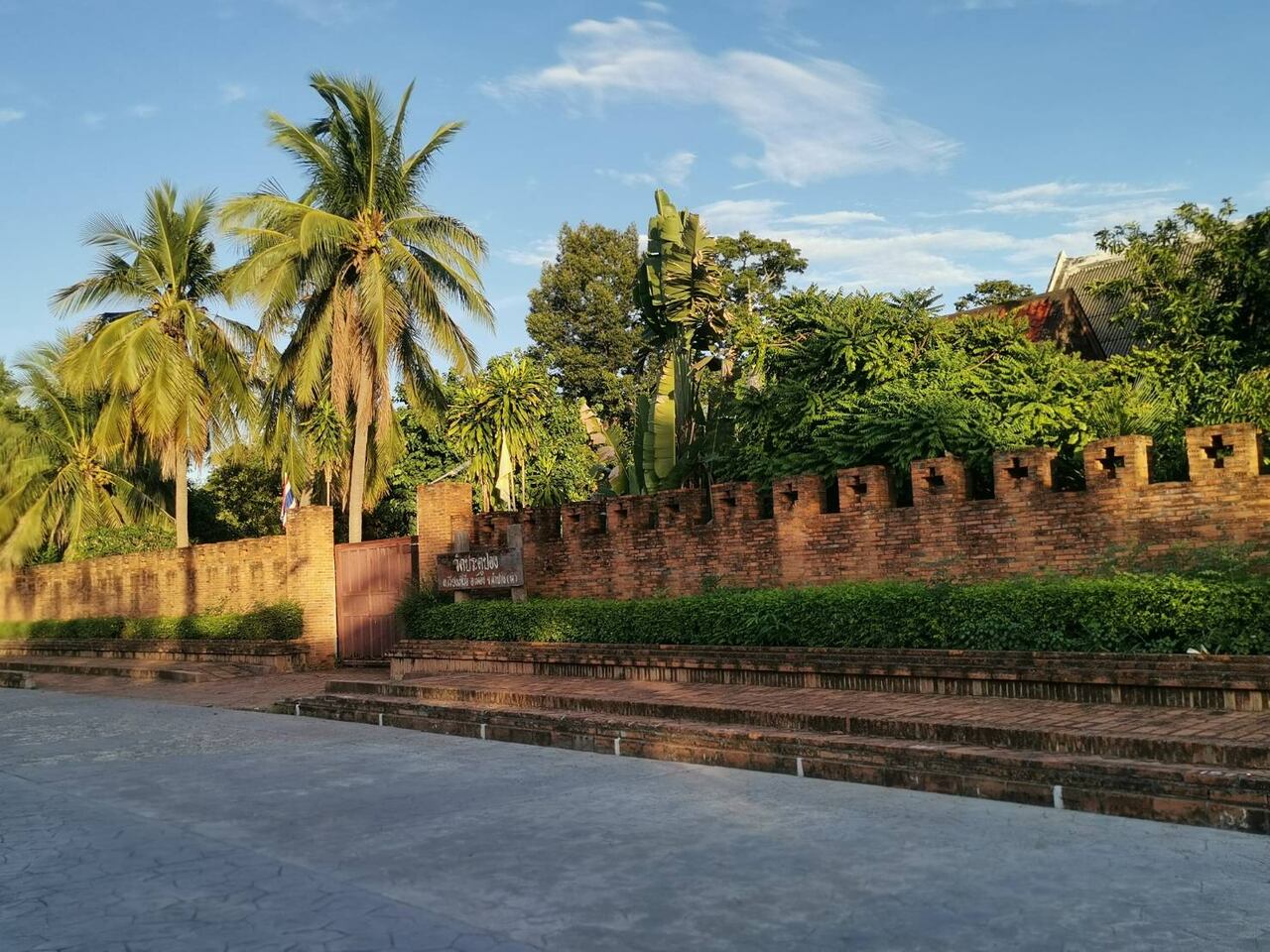
It is an important element of Wat Pratu Pong. The gate contains the remains of a war tower from the time of King Kawila – the ruler of Lampang and then Chiang Mai. He ruled from 1782 to 1802. At that time, there was an important fortress in this place defending the city in 1878 from the Burmese army.
Information for tourists
Location
Wat Pratu Pong is located in the Wiang Nuea Sub-District of Lampang District at 23/1 Pahmai Rd.
The temple can be entered from two sides. The main entrance is on the south side if you come from Pahmai Rd. This is where the beautiful old Lanna-style entrance gate is.
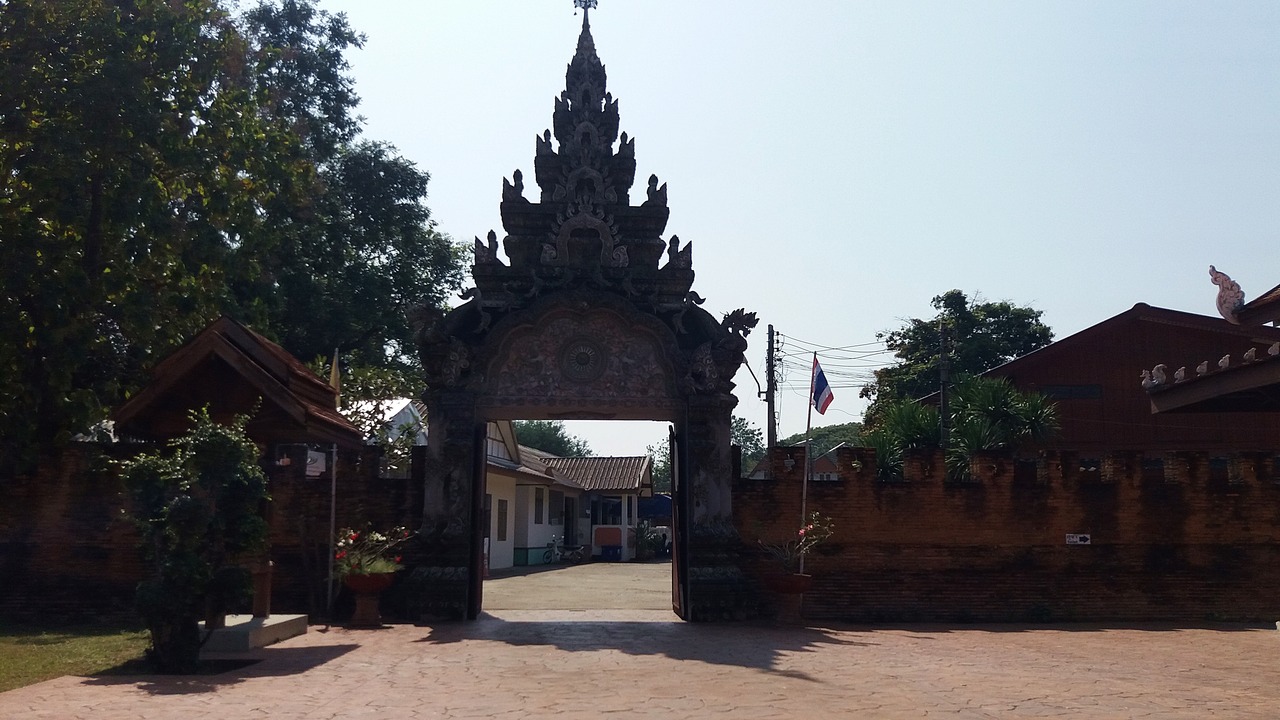
However, it is also easy to get to from the north side of Wang Nuea Street. It is where the famous Lampang Cultural Street Market takes place on Fridays. In this case, you enter through a wooden gate.
Getting to Wat Pratu Pong
Due to its convenient location, the temple can be reached by taxi, songthaew or carriage.
Is there an entrance fee to Wat Pratu Pong?
No. Entry is free.
Opening hours
The temple is open from 7 a.m. to 6 p.m.
On Saturdays and Sundays, the Ordination Hall is open from 8 a.m. to 3 p.m.
Wat Pratu Pong – summary

This place is a great example of classical Lanna architecture and has historical and religious significance. Therefore, a visit here is a perfect idea if you want to feel the real atmosphere of northern Thailand and see the old architecture. Thanks to the trip to Wat Pratu Pong, you can experience it. Therefore, it is worth including this temple in your Lampang sightseeing plans.