
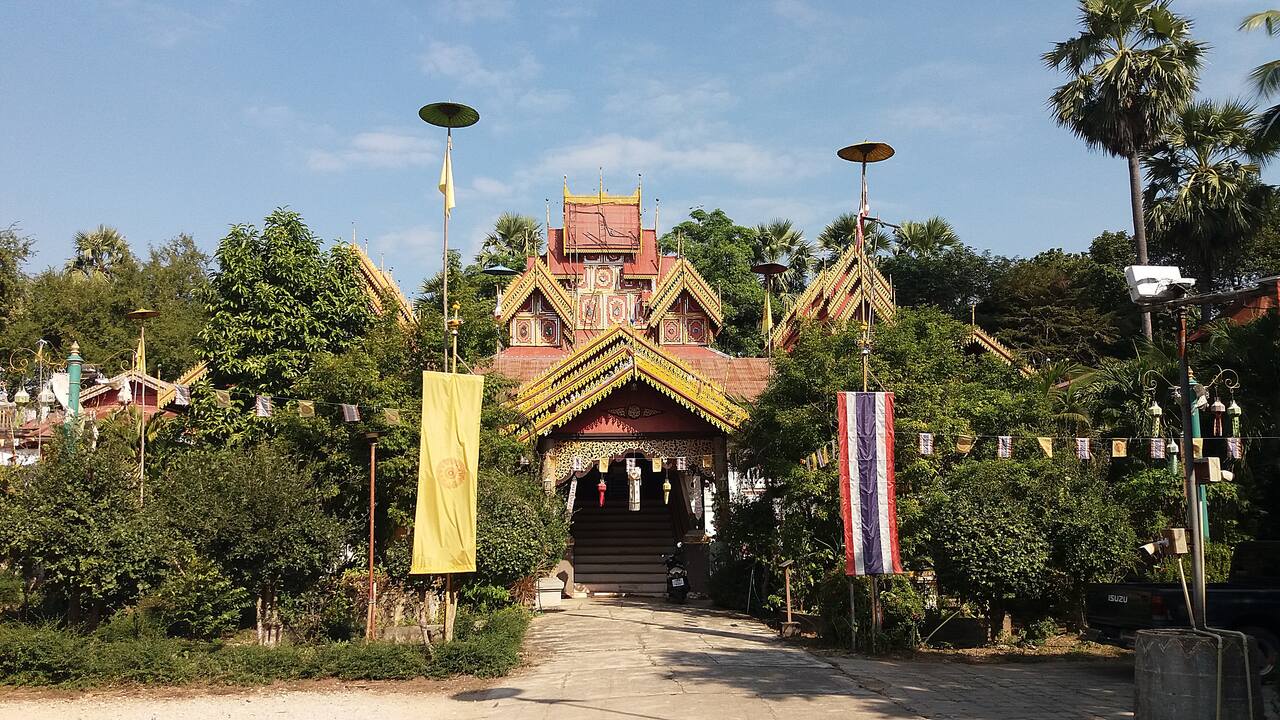
Wat Si Rongmuang is one of many excellent examples of Burmese temple architecture in Lampang. The city is famous for having the largest number of similar structures in Thailand. A visit here is an opportunity to see amazing architecture, many decorations and statues, and this article will reveal more details.
Wat Si Rongmuang – the origins of this place
The temple was built in 1905 by a Burmese tycoon from the Shan people, Chong Tak Intha, together with craftsmen from Mandalay. They came to Lampang to work in the teak industry. The date of foundation of Wat Si Rongmuang is also considered to be 1904, although we use the information provided by the temple.
The main structure, the Viharn, took 7 years to build. Work on it was completed in 1912.

An interesting fact is that the temple served as a sanctuary for the builders. It was important for the people who cut down trees to ask for forgiveness from nature. One way to do this was to build a temple where they could make merits and offerings. In this place, they also asked the holy spirits and holy things for protection from potential dangers.
Describing the history of the temple, we will stop for a moment at the name. Wat Si Rongmuang is a distorted spelling of Wat Si Songmuang. This is how the original temple was named after the donors of the land – Jong Taka Intha and Mae Jong Taka Intha Kham On Si Song. It was built in 1891 on the site of the current complex. The original name in the initial period was Wat Ta Kanoi Burma.
The Fine Arts Department announced the registration of the temple and defined its boundaries in the Royal Gazette, Volume 98, section 177 of 27 October 1981.
Viharn at Wat Si Rongmuang
External appearance
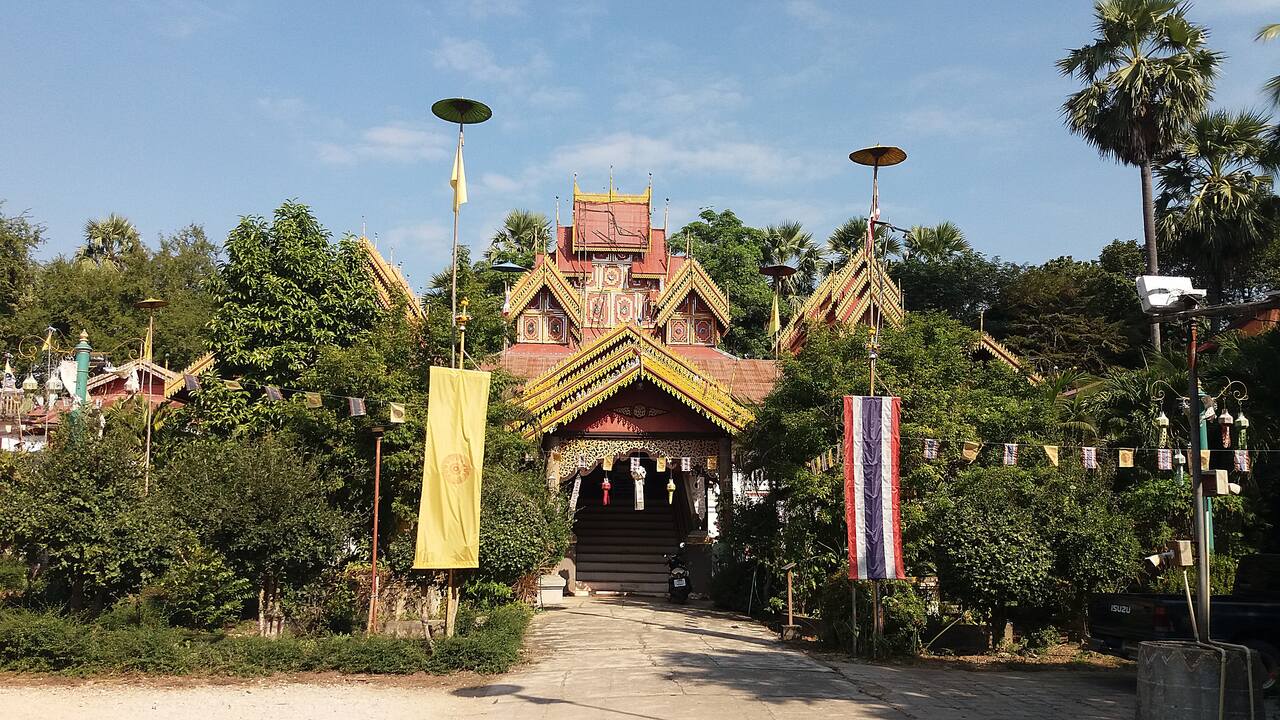
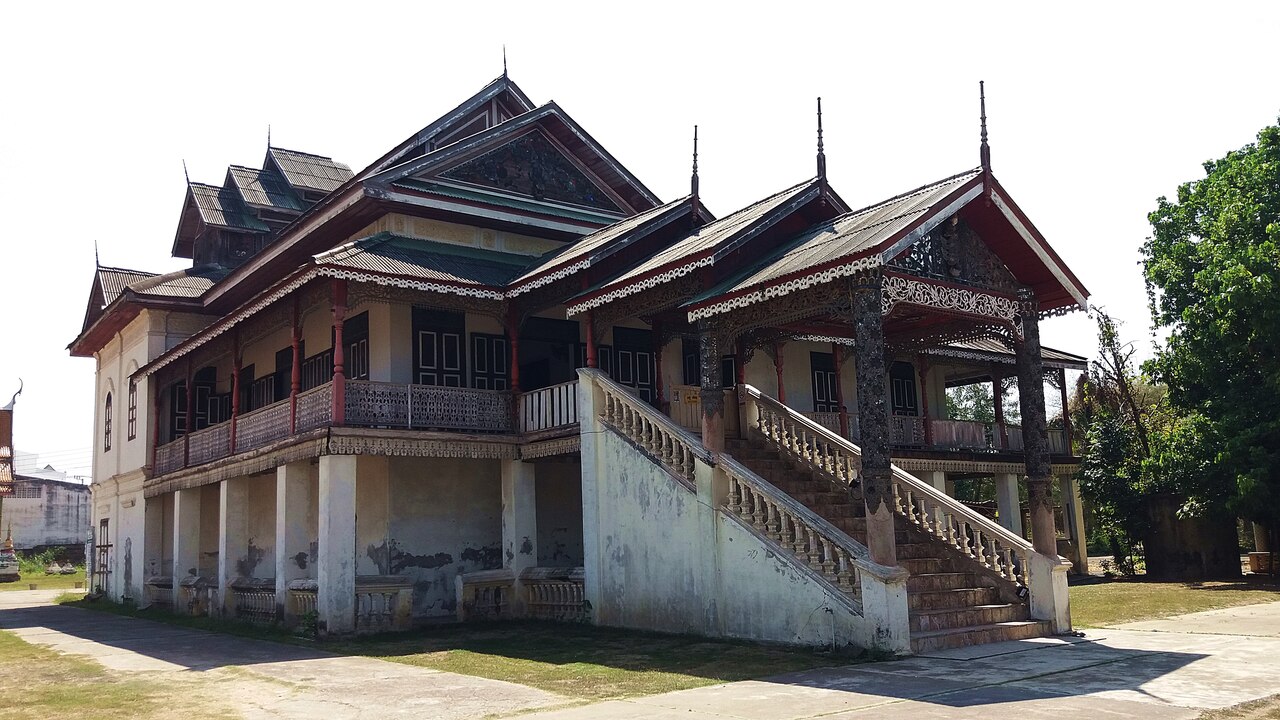
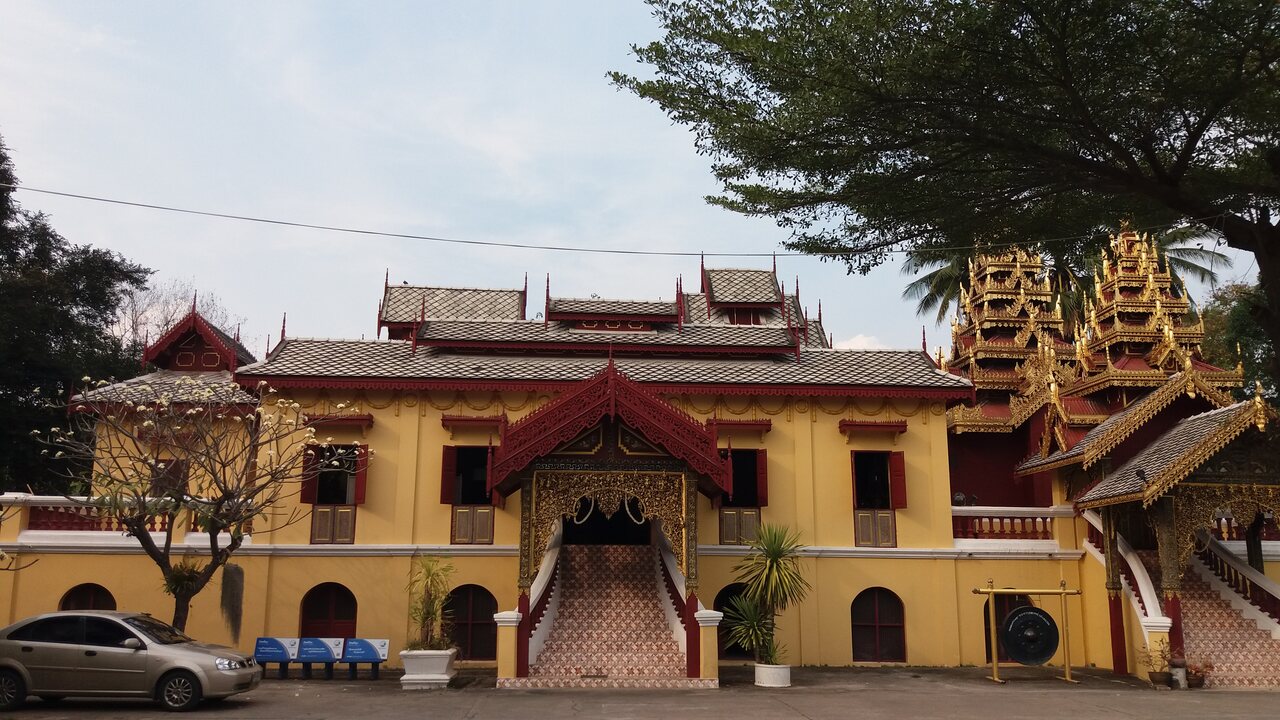
The largest and most impressive structure at Wat Si Rongmuang. It is an object built on a horizontal axis with a decorated multi-tiered roof. It is interesting because it allows a wide view of the temple from the front. Similar structures built in the Lanna and Rattanakosin styles have a different orientation, and usually only the front facade is visible when approaching them.
A variety of materials were used to construct the two-story building. The first floor is made of brick and mortar. The upper part is made of wood.
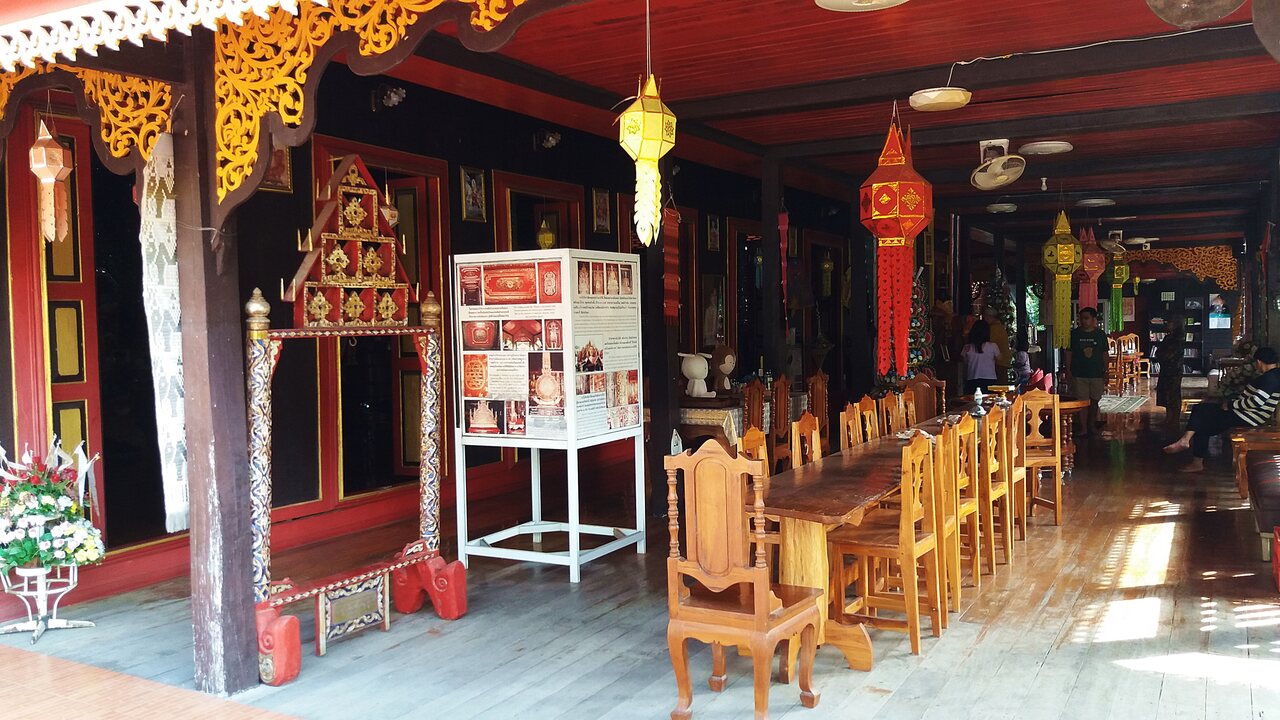
In addition, the exterior of the structure is decorated with flags, exhibits, and plaques describing the history of the place.
Internal appearance
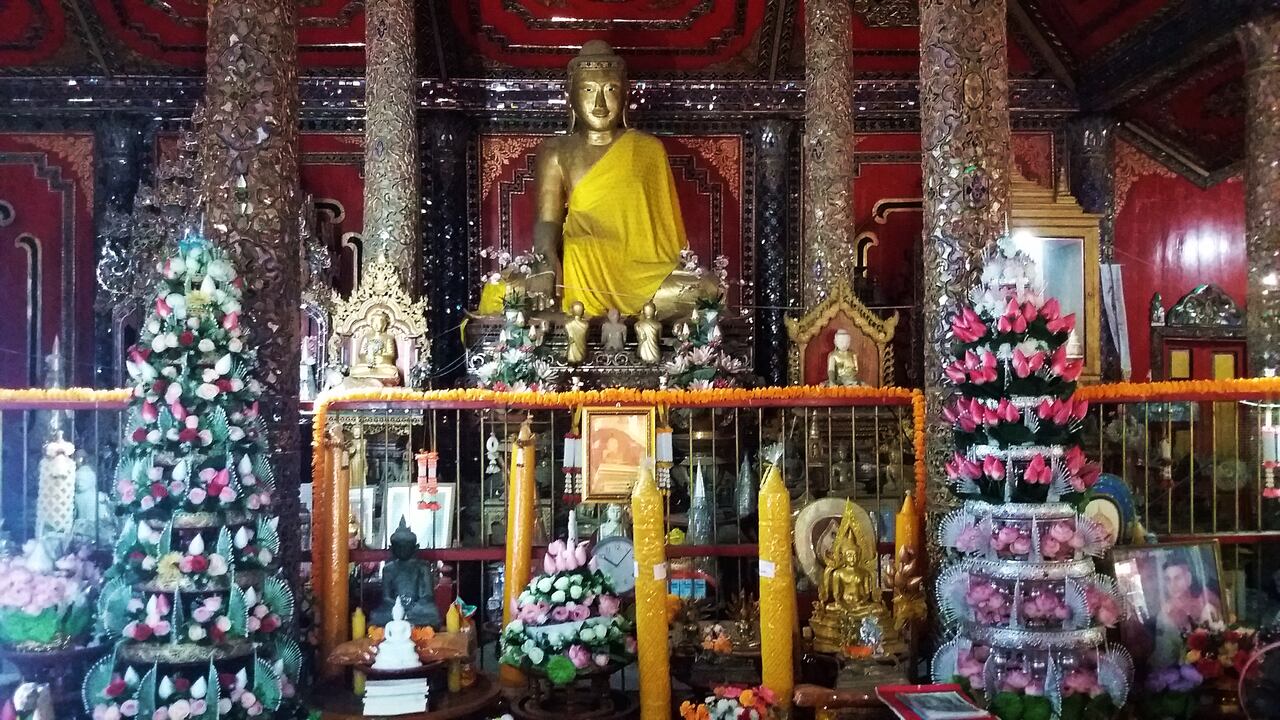
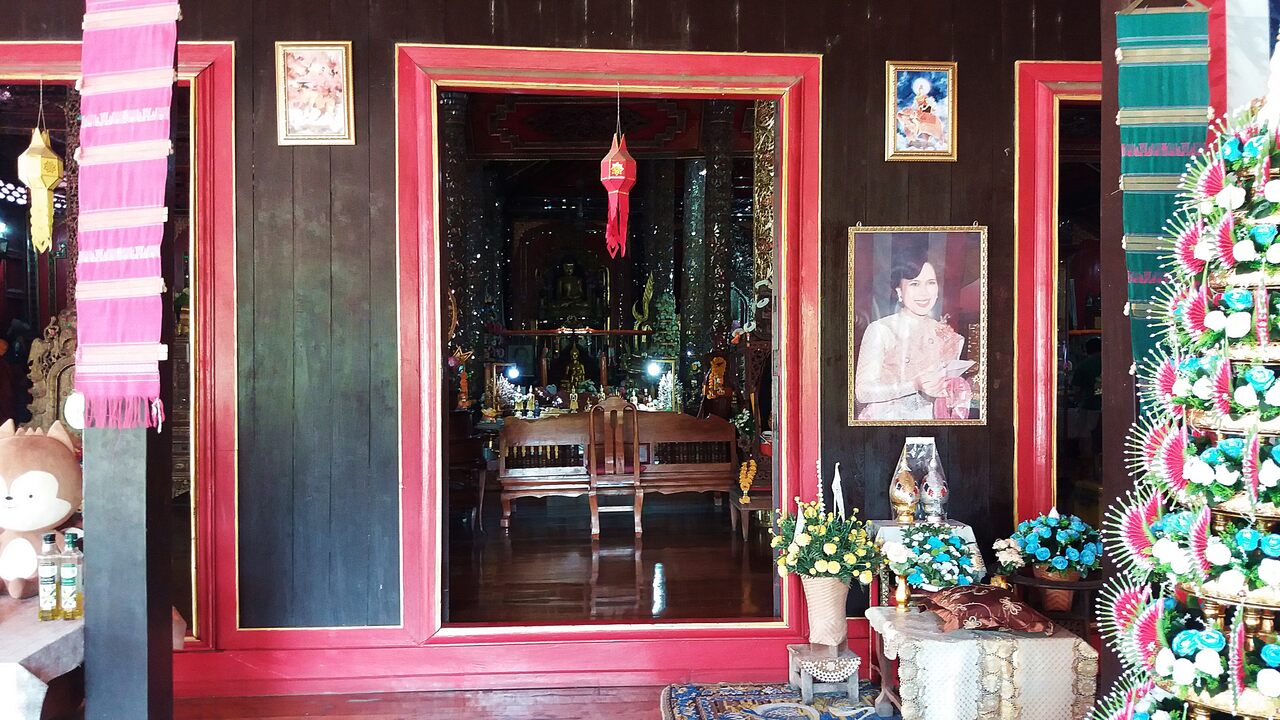
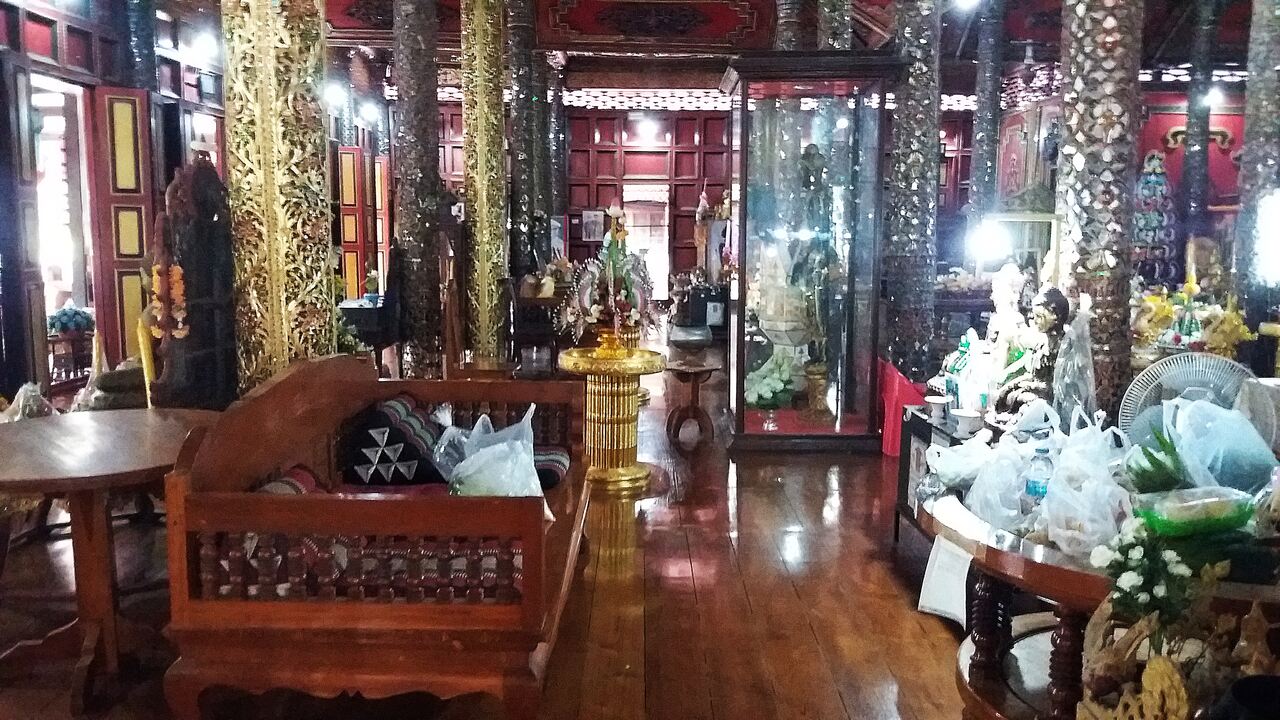
Upon entering the Viharn (Assembly Hall), you can see many images of Buddha, saints, Kings, and members of the Royal Family. Among them are three Buddha statues in the attitude of subduing Mara. The main Buddha statue has a diagonal robe, while the two images on both sides of Him have robes covering their shoulders.
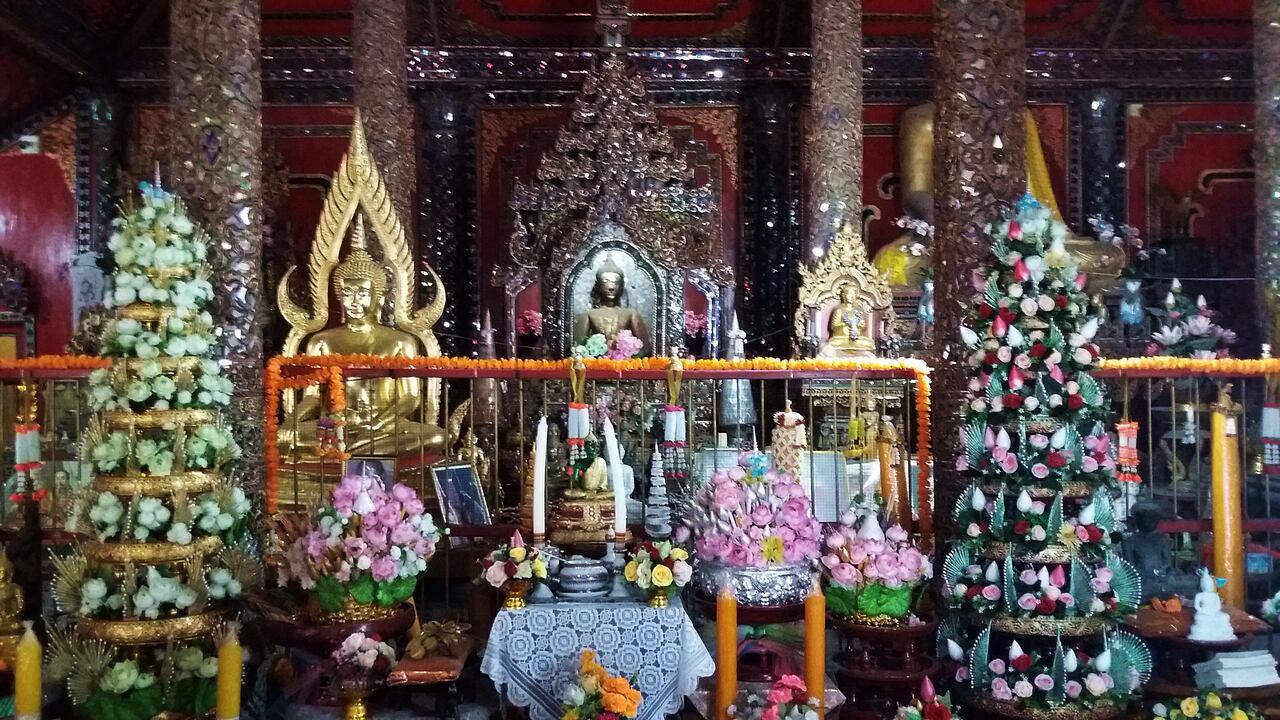
Another exceptional image of the Enlightened One at Wat Si Rongmuang is the second from the left. It is made of multi-colored glass in the Lanna style, and it is placed in a mandapa, or pavilion, and is shown in a meditative attitude.
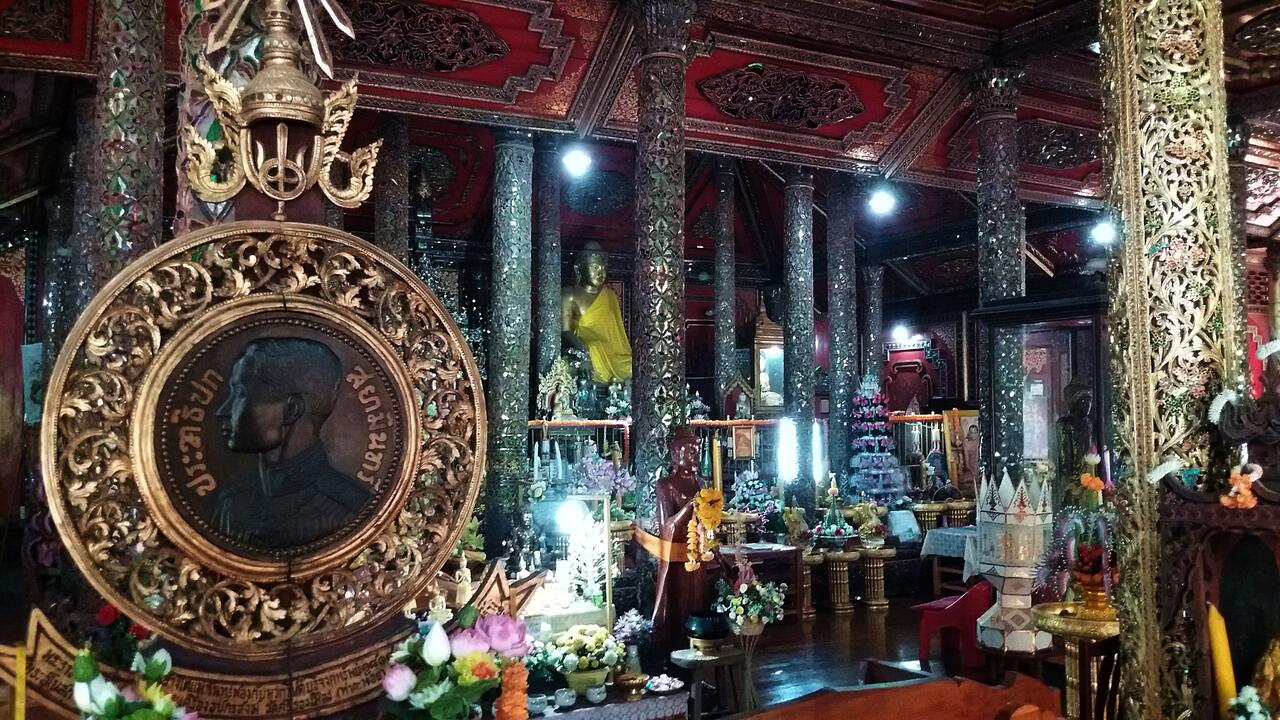
Also worth noting are the wooden pillars decorated with floral and vine patterns. The pillar opposite the main Buddha statue is decorated with images of guardian angels, monkeys, humans, demons, and mythical animals from the Himmanpan Forest.
The story behind the main Buddha statue
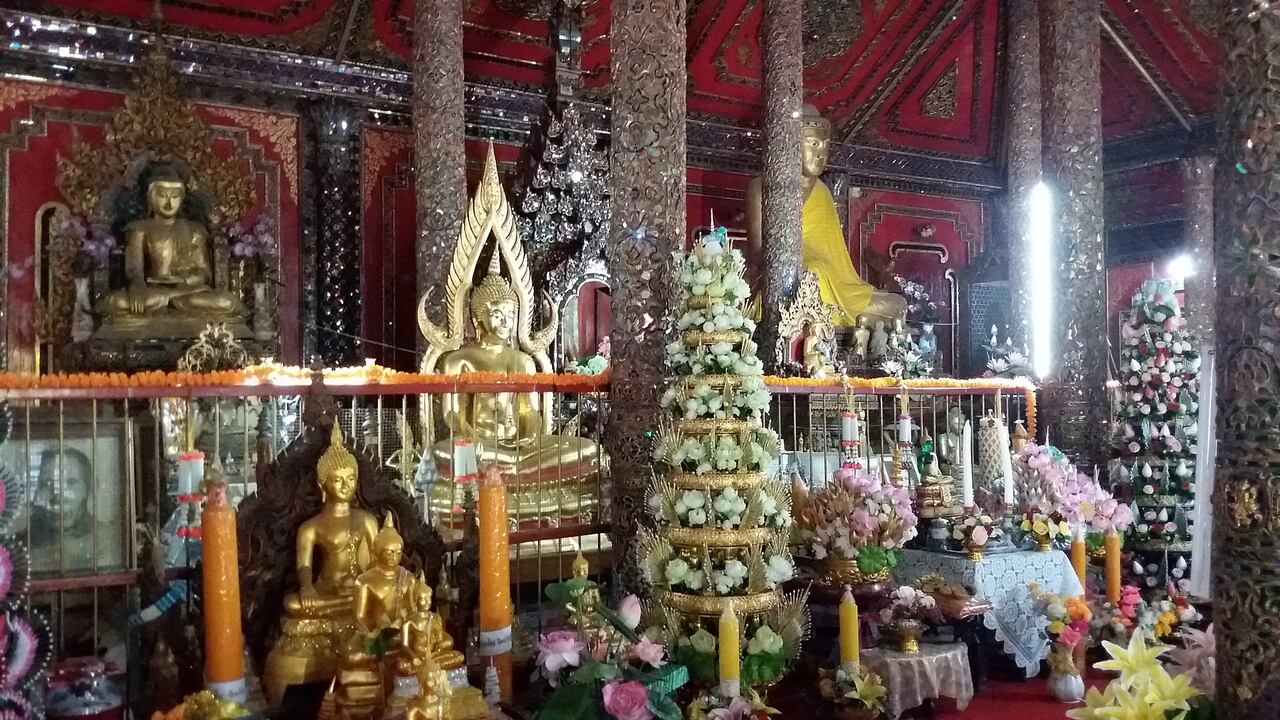
In the past, a large log of teakwood floated down the Wang River and got stuck at the pier near Wat Si Rongmuang. The people of Lampang helped carry the log to the temple for storage.
One day, there was heavy rain and strong wind, but the candles lit on the log would not go out. This was seen as a sign, and Jong Tak Intha commissioned craftsmen to carve a Buddha statue from a block of wood, which was then placed in the temple.
Other objects at Wat Si Rongmuang
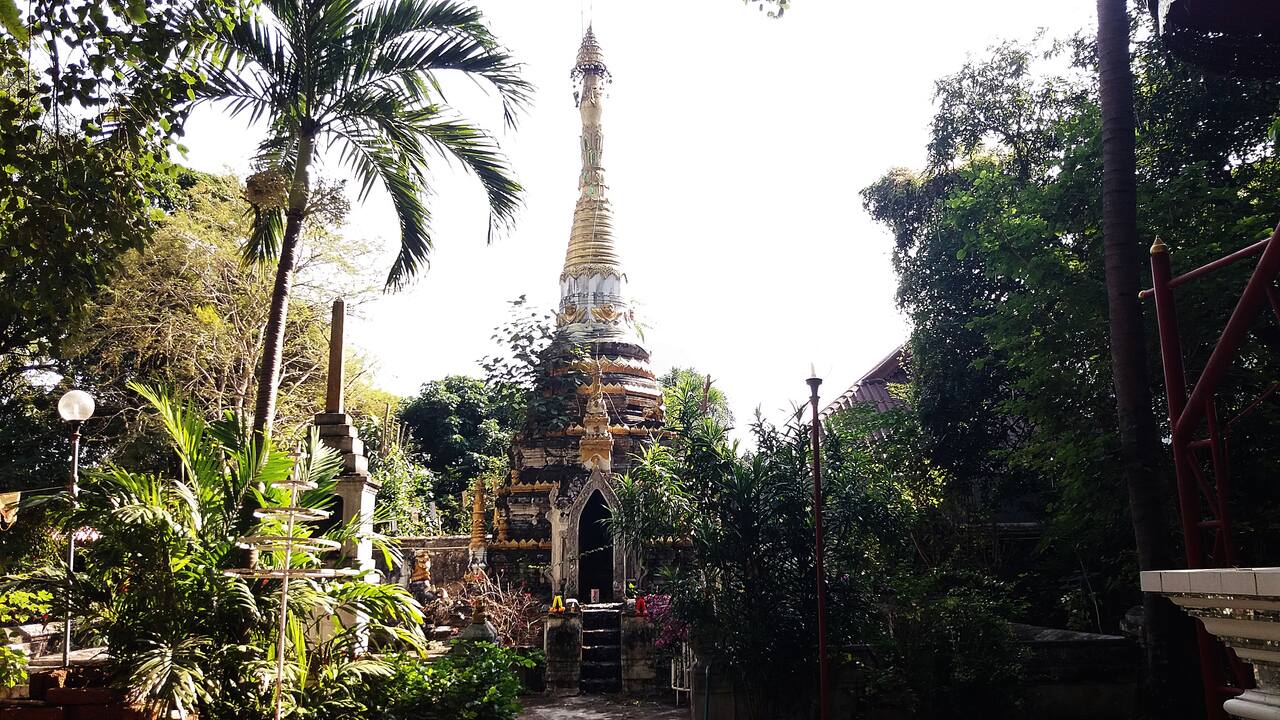
To the right, looking from the entrance, is a chedi among trees. Its architecture is in the Shan style. The structure stands on a square base and is topped with an ornate umbrella. The upper part is gilded, while the lower part is white, although slightly darkened by external factors.
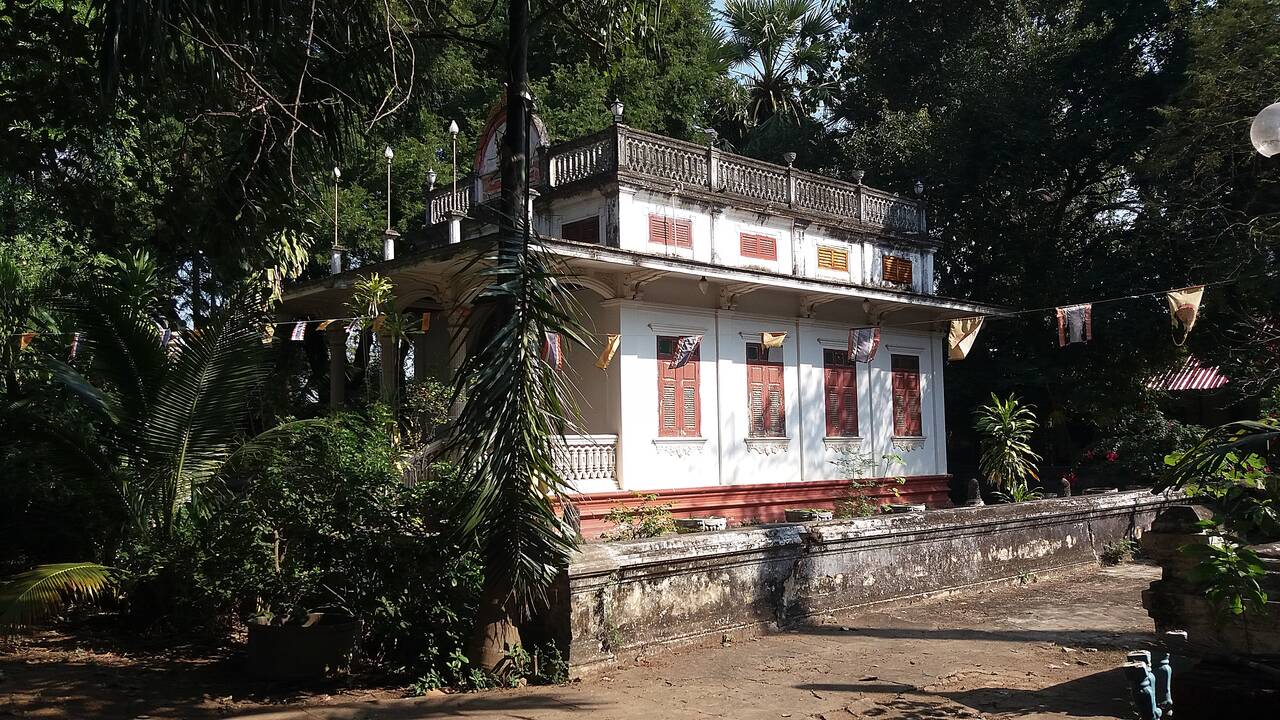
Next to the chedi is a small Ubosot (Ordination Hall), and in front of both structures are a sacred Bodhi tree and a white Buddha statue sitting under an umbrella.
Key information for tourists
Location
The temple is located at Wang Khwa Rd 64 in Sop Tui Sub-District of Lampang District.
Access
You can get there by hiring a taxi, songthaew, or carriage in the city.
How much is the entrance fee to Wat Si Rongmuang?
The entrance fee is 50 THB.
Opening hours
Every day from 6 a.m. to 6 p.m.
Other nearby attractions
The temple is close to Khelang Nakhon Public Park and Clock Tower Intersection.
A little further are Wat Chiang Rai and Kad Kong Ta Night Market.
Wat Si Rongmuang – summary
When visiting Lampang, it is a good idea to plan your trip to include this temple. It is a great opportunity to see amazing architecture and learn about some of the city’s rich history. A visit to Wat Si Rongmuang will bring many unforgettable experiences. Then it is worth going to other attractions, which we warmly encourage you to do.