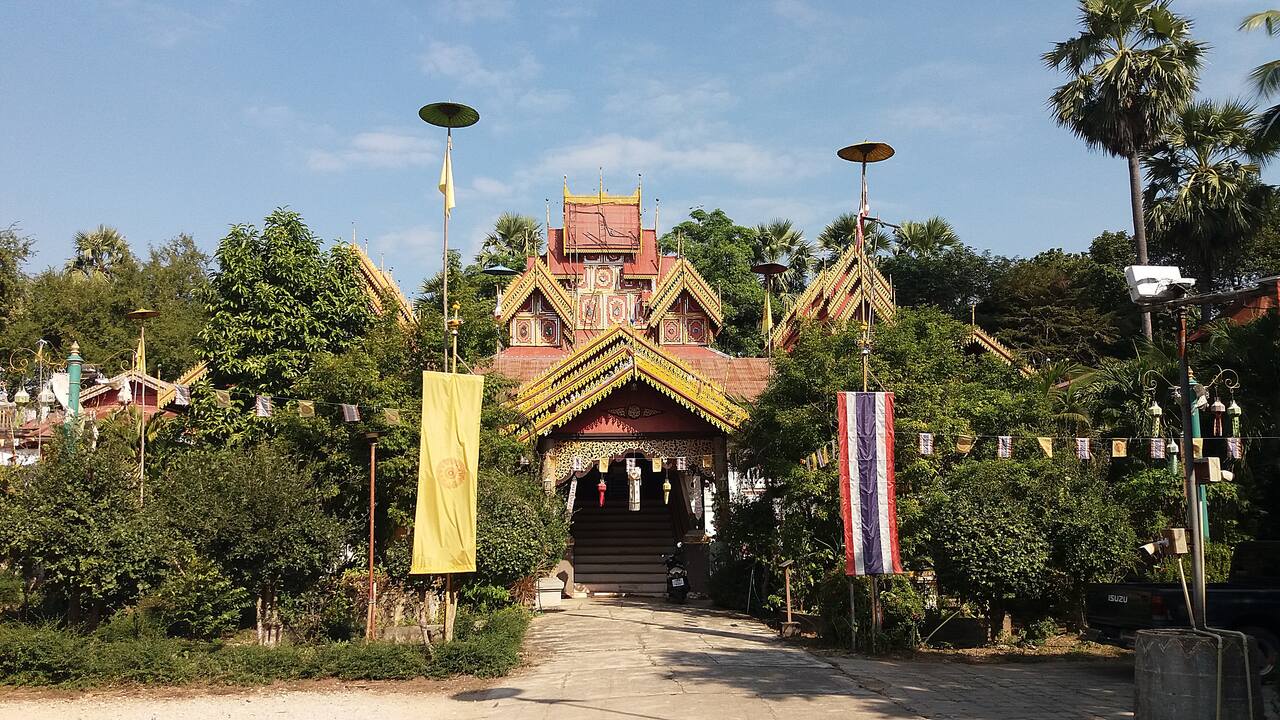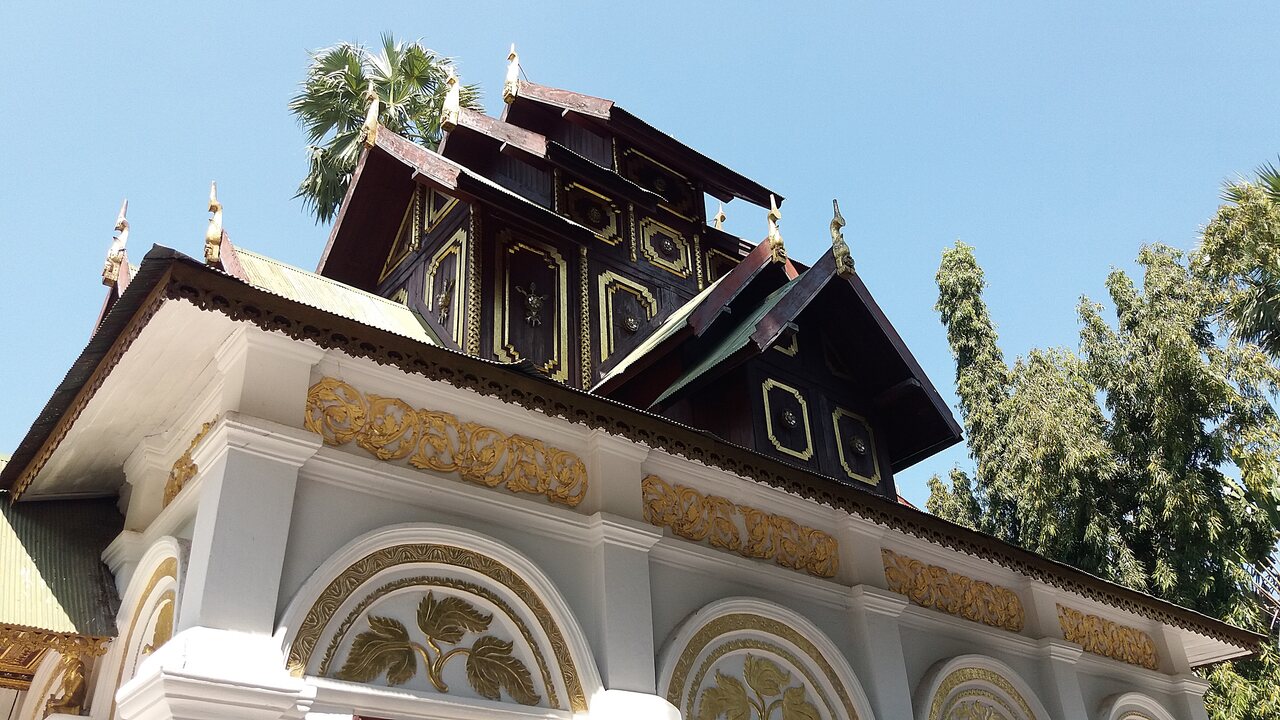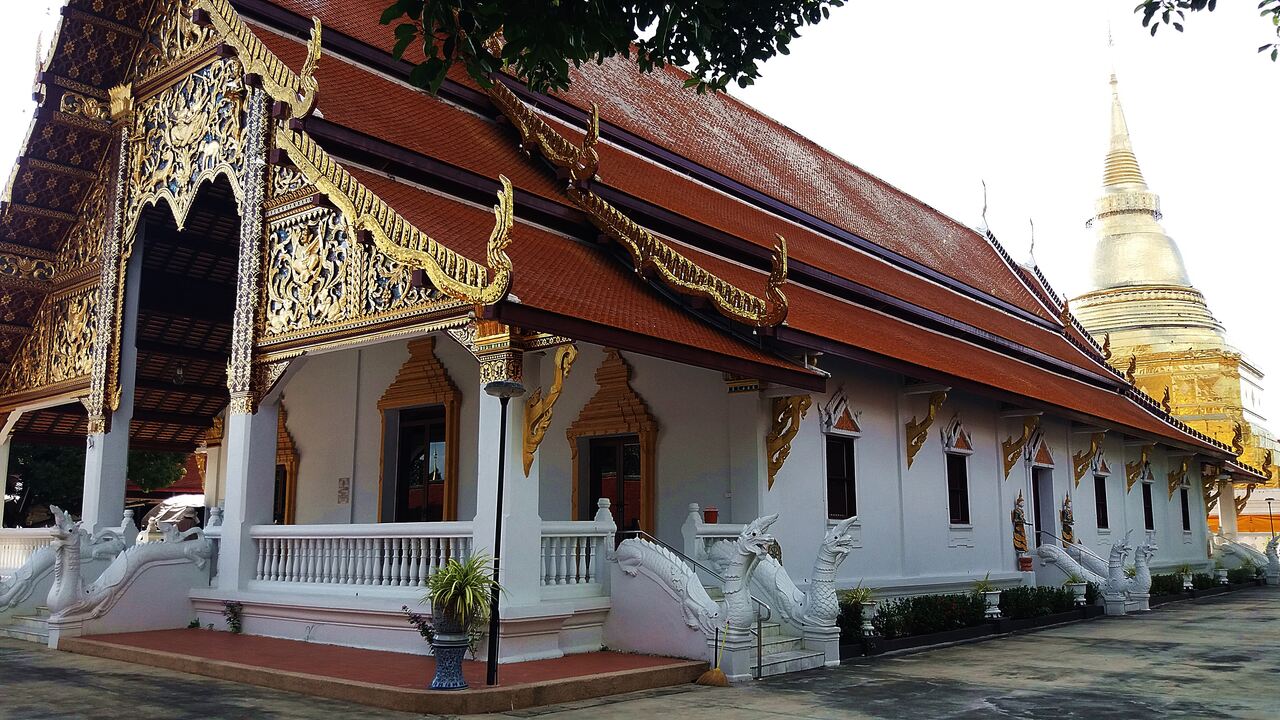


Wat Bunyawat Wihan is a place with a long and interesting history that is worth knowing. The temple also has great significance for the people of Lampang, as it was the site of important ceremonies. You will learn all about it in this article, and it is a good idea to include this attraction in your Lampang sightseeing plans.
Wat Bunyawat Wihan – the meaning of the temple and its history
The origins of the temple date back 400 years, although it is not known when it was founded or who built it. Due to the lack of evidence, only stories exist.
Over the years, it has undergone many changes and has been demolished, renovated, and rebuilt several times. Initially called Wat Klang Muang, it served as a place of religious worship for the local people.
In 1804, during the reign of Phraya Kam Som, the temple was demolished and a new one was built in its place. The name was also changed to Wat Luang Chai Santhan. Despite this, the temple’s condition deteriorated in the following years.
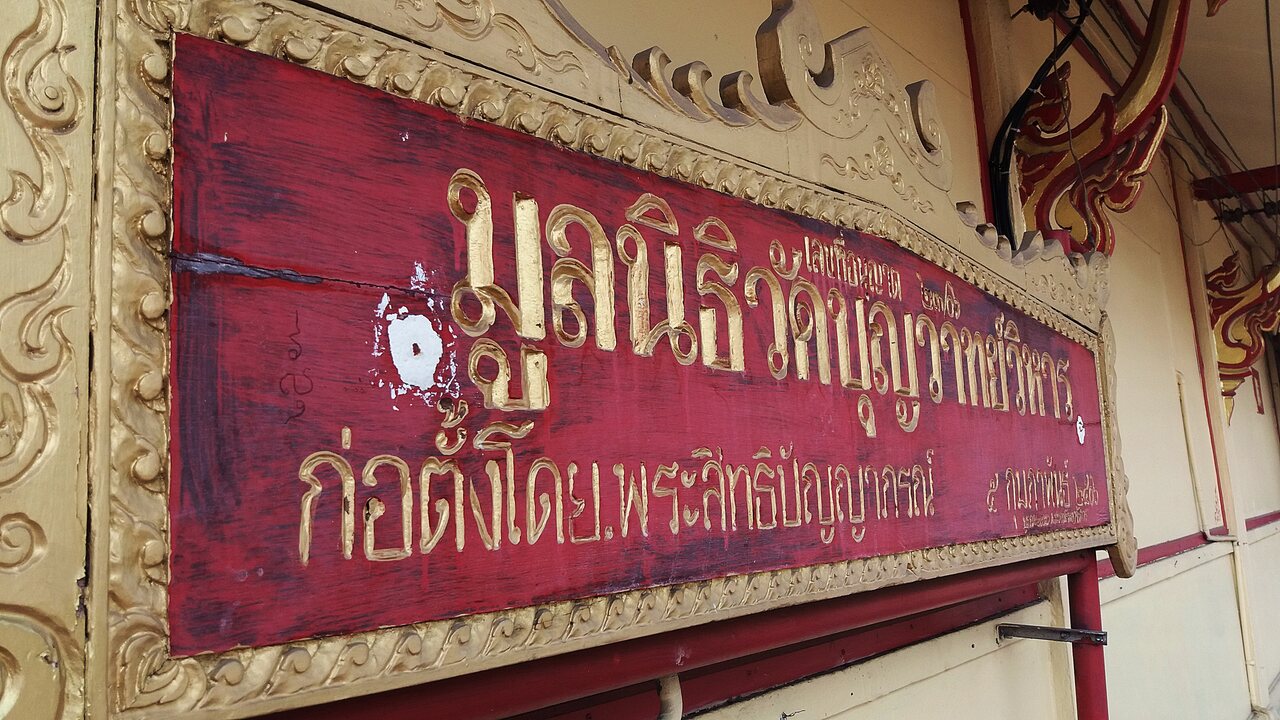
More than 100 years later, in 1912, another demolition and reconstruction of almost the entire complex was carried out by Bunyawat Wongmanit – the ruler of Lampang from 1898 to 1922. The name was changed again, this time to Wat Bunyawat Bamrung.
A few years later, in 1915, the temple gained royal status, and its name was changed again to Wat Bunyawat Wihan. Thus, it became the first Royal Temple in Lampang Province.
Although the temple has undergone many changes over the centuries, it has long been an important place for royal ceremonies of the oath of allegiance – Sri Satchapanakan. This is a ritual performed for the royal family and government officials who swear loyalty and allegiance to the king.
Ubosot in Wat Bunyawat Wihan – formerly the Royal Viharn
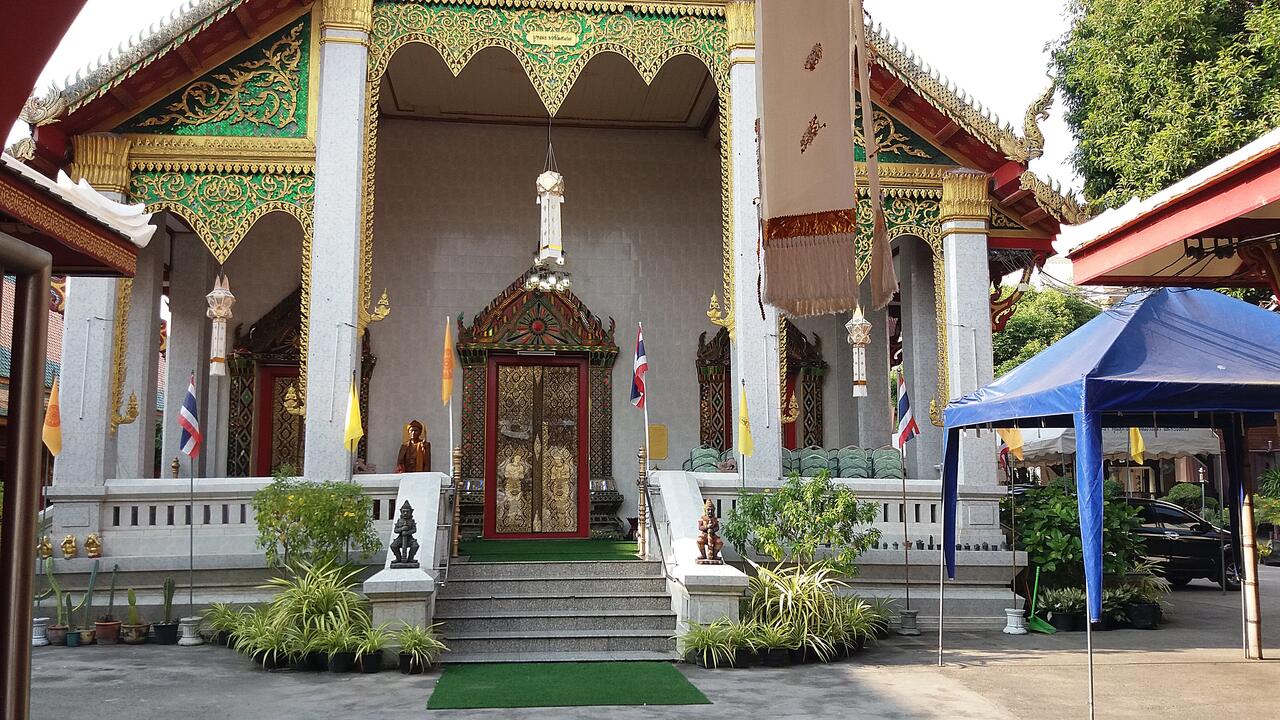
This is the main structure, the construction of which was completed in 1914. Bunyawat Wongmanit, during his reign, ordered Luang Prasanmaitrirat, the chief architect, to copy the model of the royal temple in Bangkok. The result is a building characterized by the style of the central region of Thailand with only a few elements of Lanna art. These elements are believed to have come from the original temple. These are the pillars and Tung Kradang (flags of the Lanna people made of cloth or paper).
The main Buddha statue inside was also cast in the same year. It was named Phra Chao Ton Luang and is over 2 m wide and about 4.40 m high.
In 1915, Bunyawat Wongmanit, together with Abbot Phra Thammachindanayoka, presided over a grand temple ceremony attended by royal officials and 120 monks. During the ceremony, boundary markers were set around the building. Thus, the Royal Viharn became the Ubosot (Ordination Hall). After this, King Rama IV granted the temple royal status.
Other temple complex structures
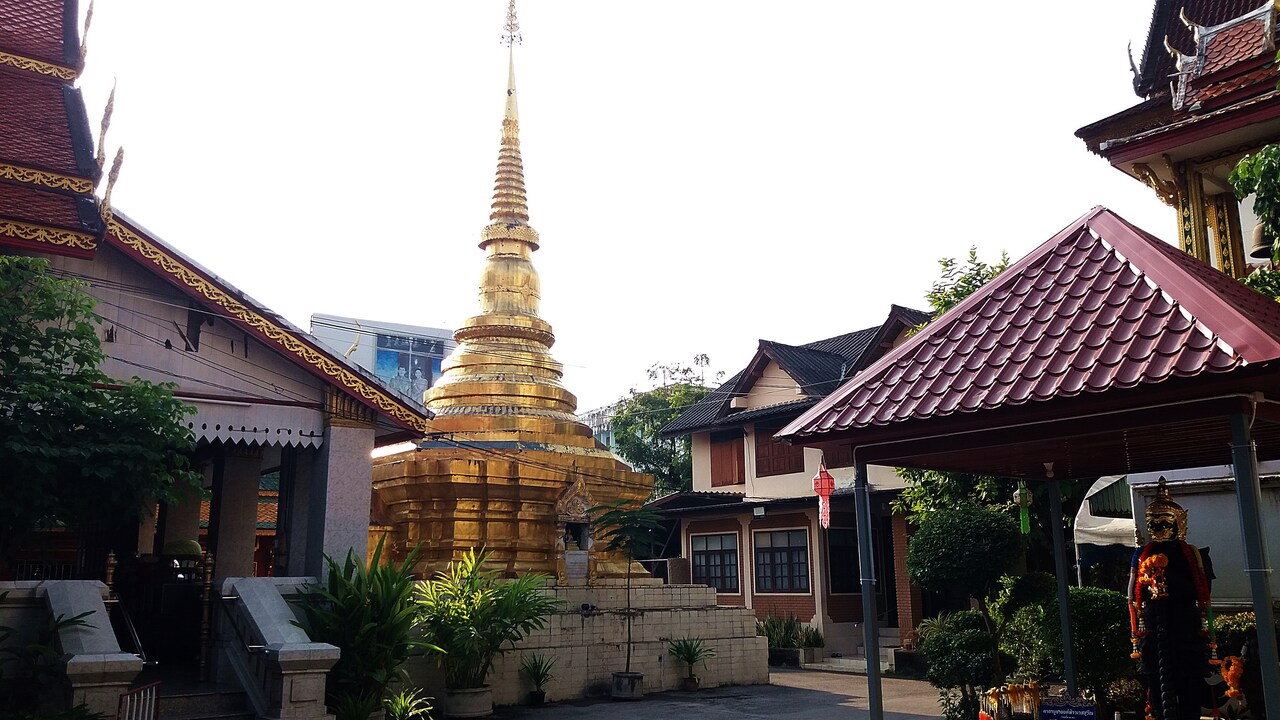
While visiting Wat Bunyawat Wihan, in addition to the Ubosot, you can see several other interesting structures. Behind the Ordination Hall is a pagoda, and next to it are statues of one of the Yakshas and Ganesha.
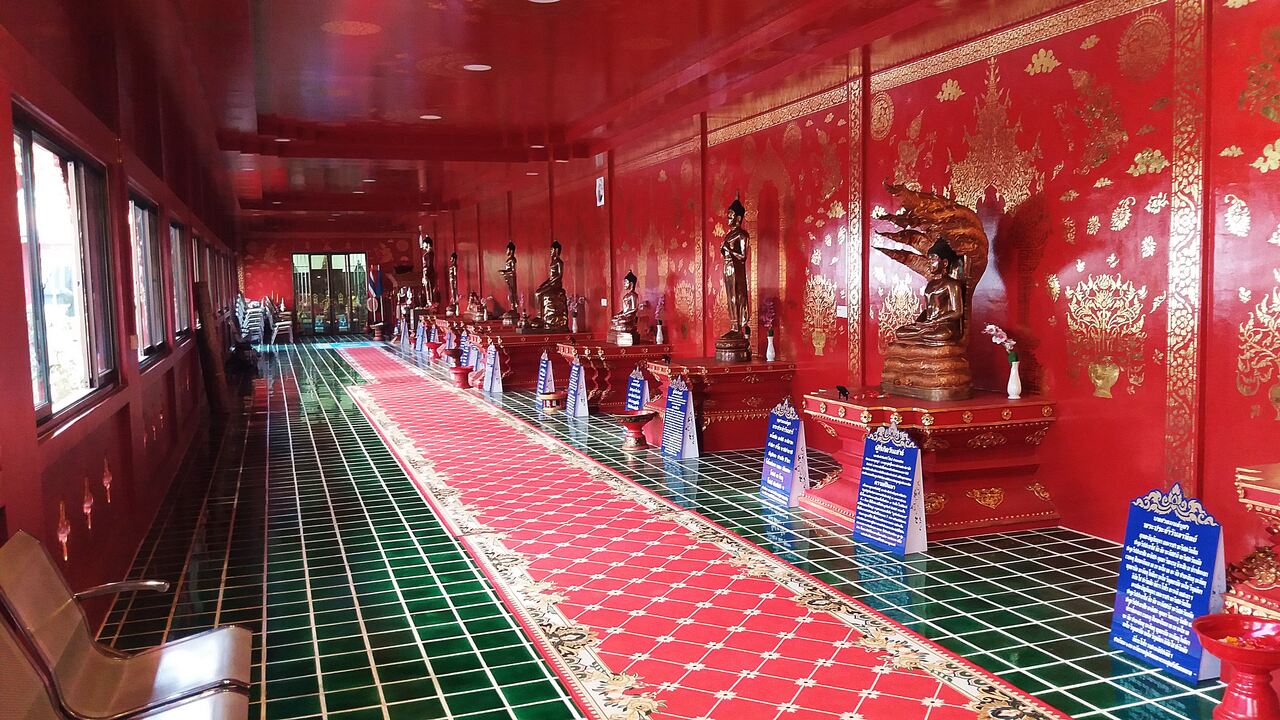
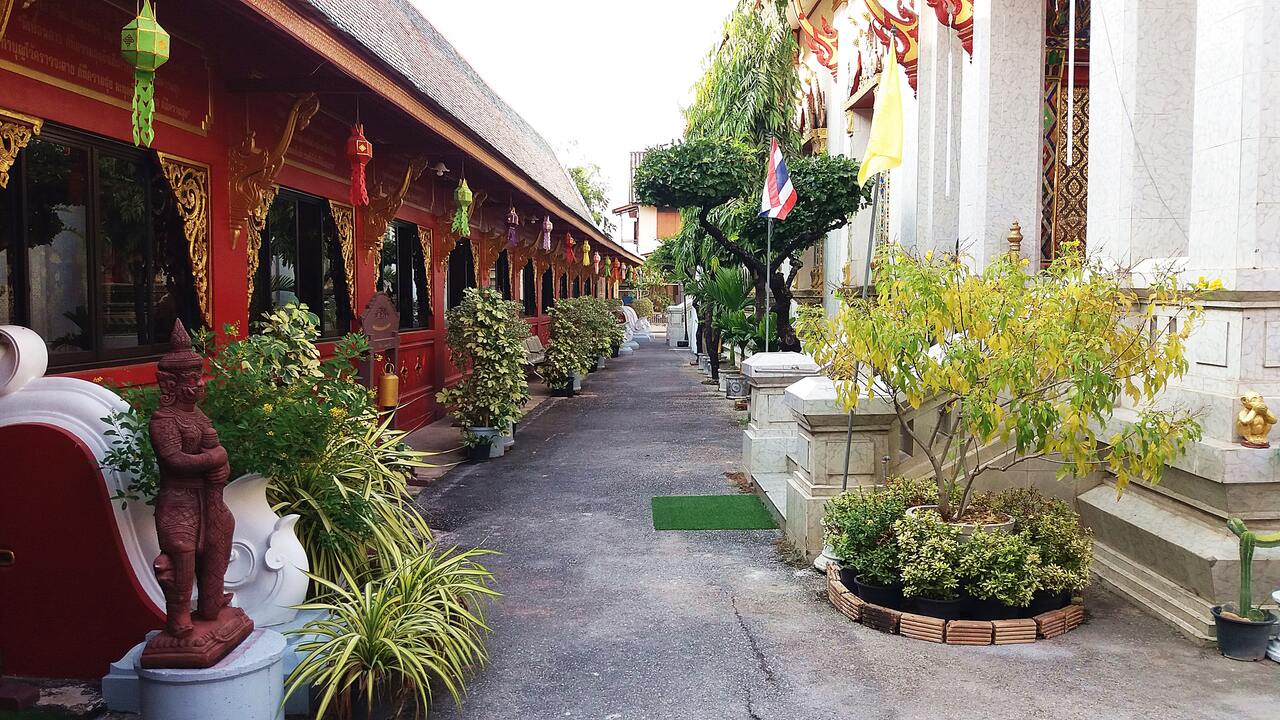
The red building next to the Ubosot is also worth a look. The long hall houses a variety of Buddha statues with Thai descriptions. Walking around the complex you can see the bell tower, the monks’ quarters, and the Dhamma study building.
Key Information
Location
The temple is located in Hua Wiang Sub-District of Lampang District on Bunyawat Rd.
Is there an entrance fee to Wat Bunyawat Wihan?
No. Admission is free. However, donations to the temple are welcome.
Access
The temple is located in the popular area of Lampang and is easily accessible by taxi, songthaew, and carriage. There is a carriage stand across the street.
Other nearby attractions
There are several places to visit near Wat Bunyawat. These include Museum Lampang, Mandapa Phra Putthanirarokantarai Chaiwat Jaturathit, and Lampang City Pillar Shrine.
About 700 m to the north is Kad Kong Ta Night Market.
Wat Bunyawat Wihan – summary
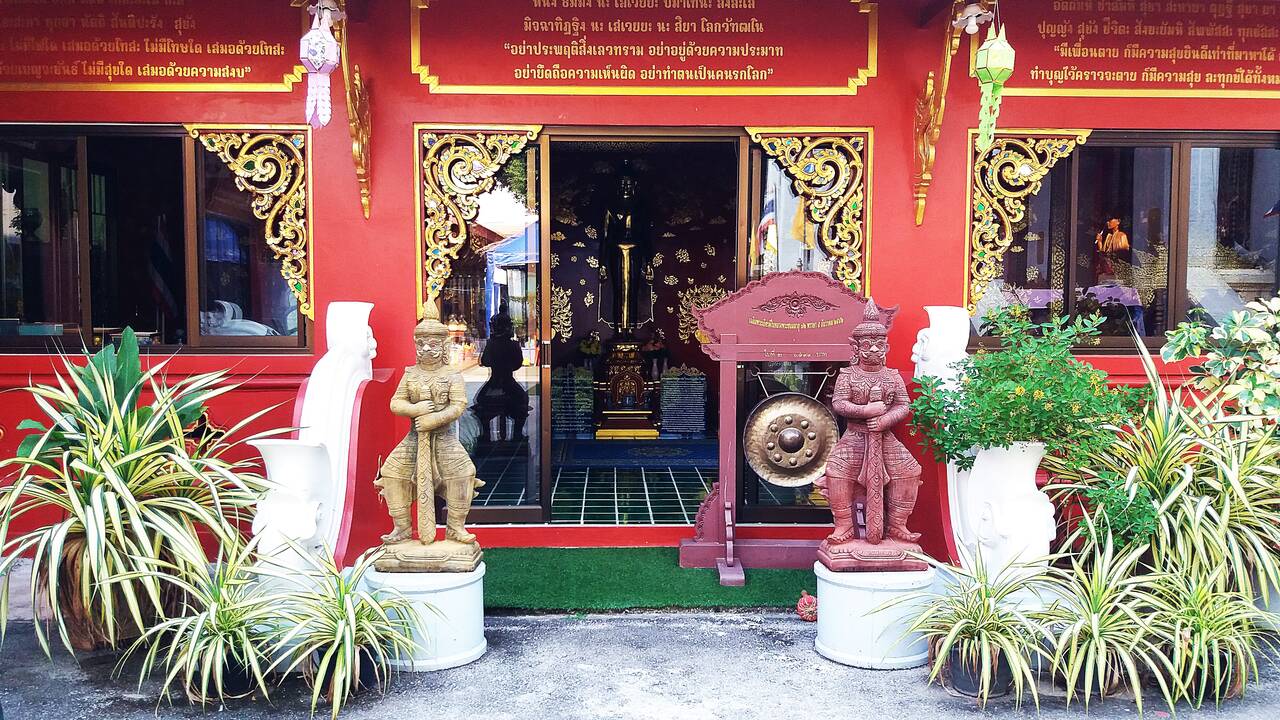
Lampang is famous for its many beautiful temples with a rich history. It is one of them, and it is easy to get to due to its convenient location. This makes Wat Bunyawat Wihan an interesting attraction worth visiting when exploring the city. It is also an opportunity to learn about the past of Lampang and the temple itself. A visit here will definitely provide a lot of satisfaction.