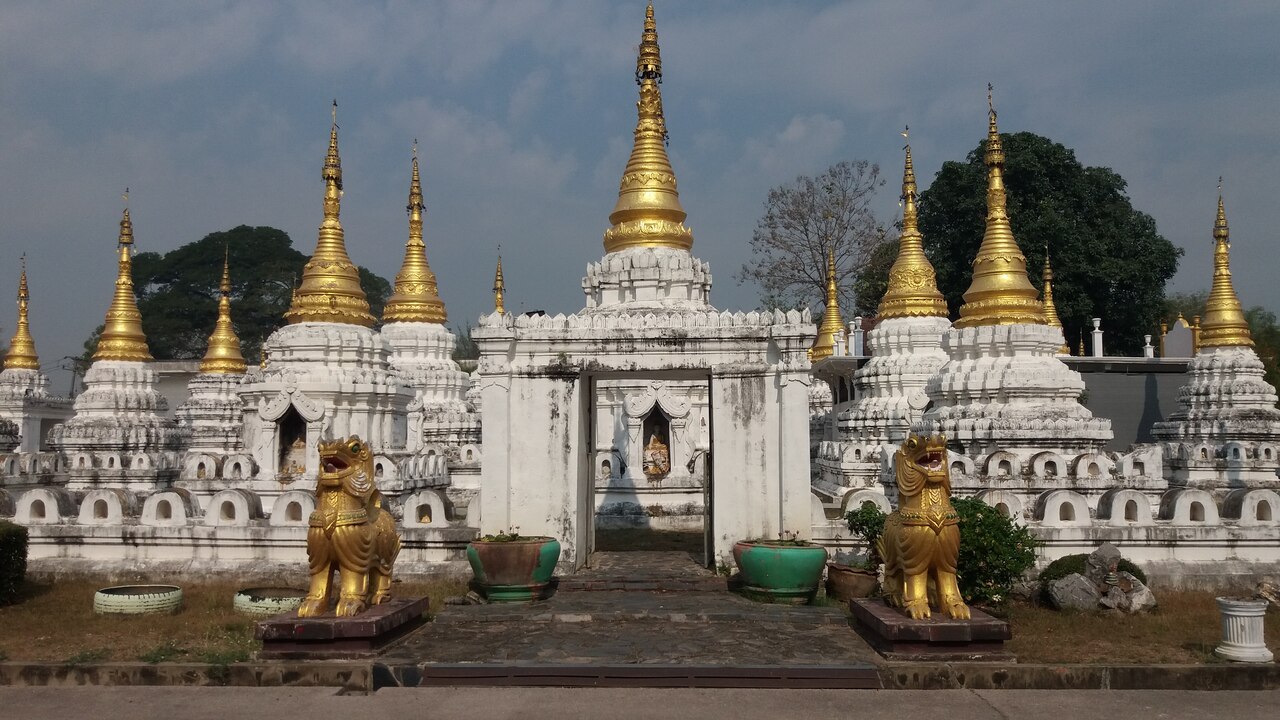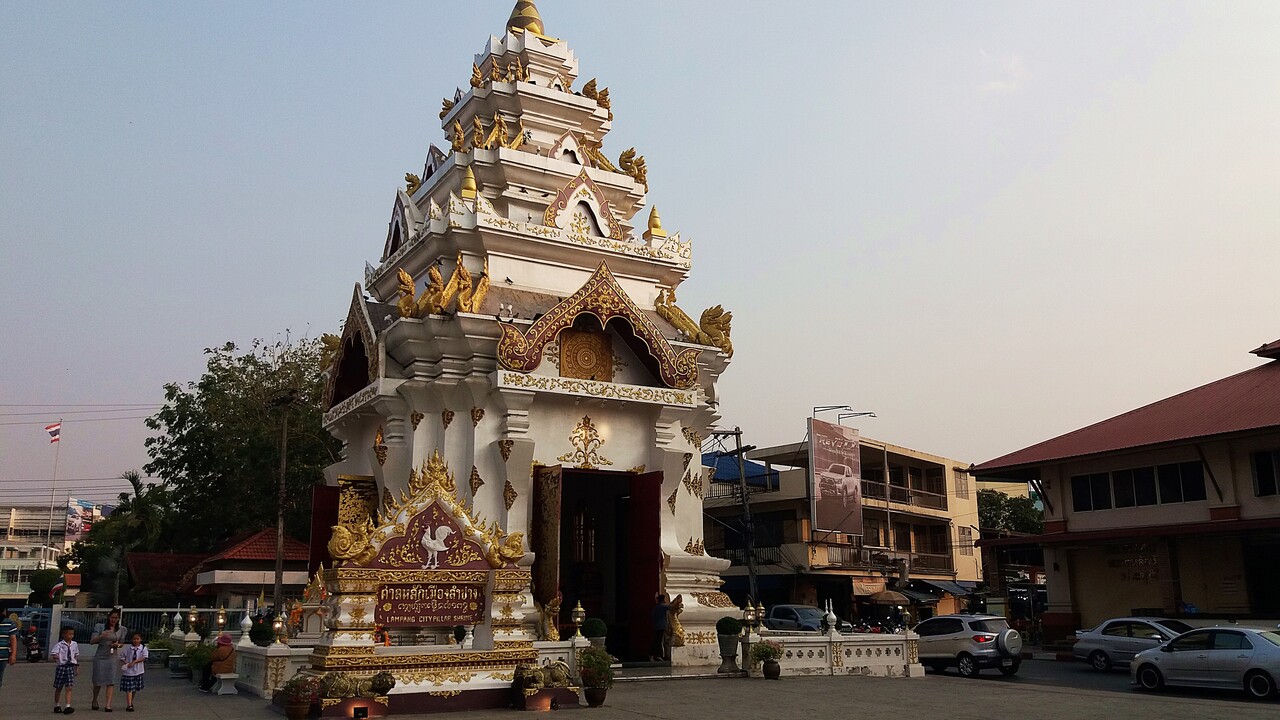

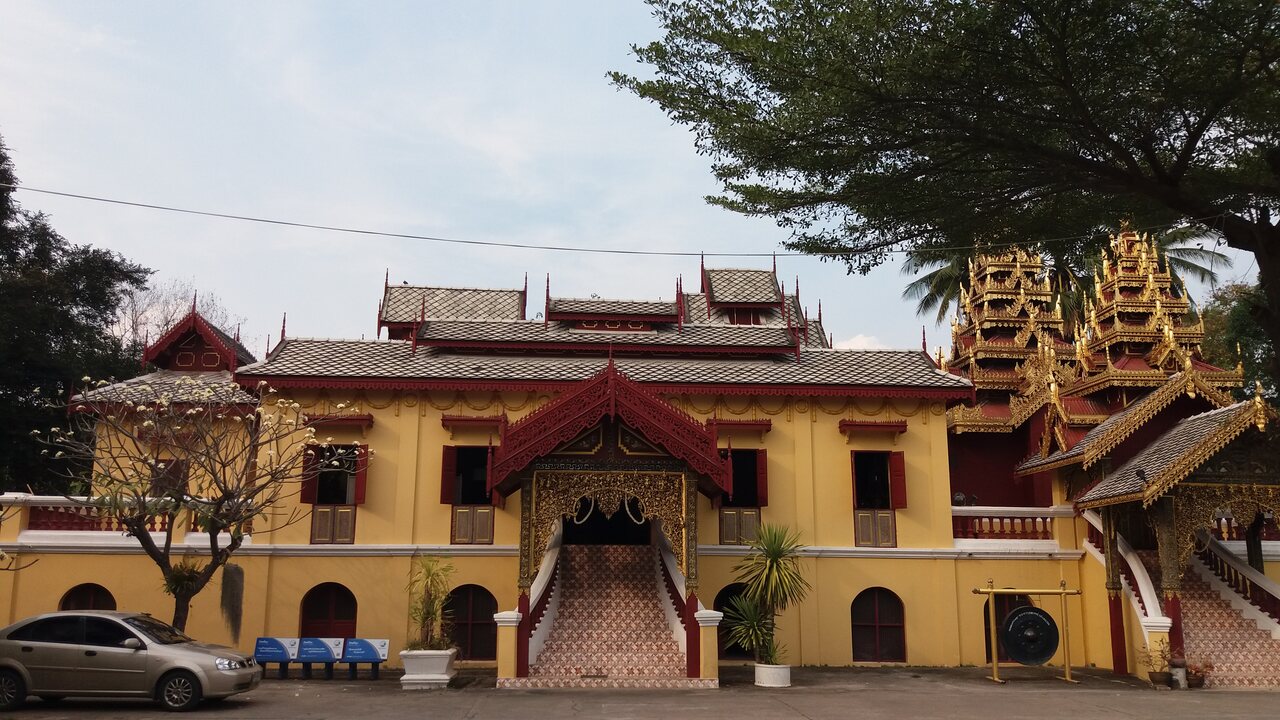
Wat Sri Chum is an excellent example of Burmese temple architecture in Lampang. The small complex contains objects that delight and have a rich history. In this article we will take a closer look at them.
Wat Sri Chum – a look into the past
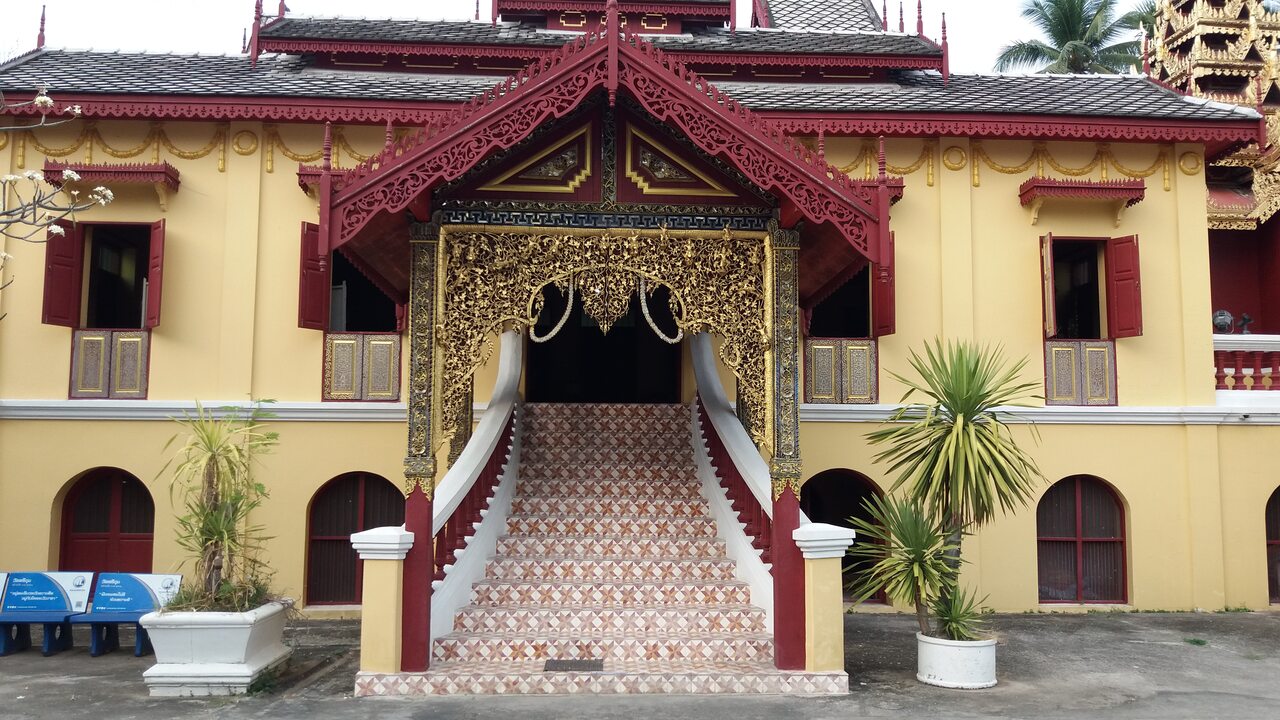
The beginning of the temple dates back to 1893. It was during this period that Uyo, a Burmese magnate, decided to build Yong Wai Jong – this is what Wat Sri Chum was originally called in Burmese.
Uyo collaborated with the British in work related to the lumber business. Thanks to this, he became richer and wanted to gain merit. It was directly related to the beliefs of the Burmese. When someone becomes rich, he must gain merit by building a temple.
In the past, in the area where Wat Sri Chum now stands, there was only an old temple without monks. There was also a forest of Bodhi trees and a pond.
Wat Sri Chum was registered in 1981 as a monument by the Fine Arts Department.
The largest Burmese temple in Thailand
If we are talking about temples with the most features of Burmese architecture, or wholly Burmese, then Wat Sri Chum can boast the status of the largest temple of this type. It is complete – it has a Viharn (Assembly Hall), Ubosot (Ordination Hall), and a chedi. It tops the list among 31 other such temples in Thailand.
Location and most important information
Location
Wat Sri Chum is located at 211 Tippawan Rd in Mueang Lampang District.
Access
You can hire a songthaew or a taxi. The distance to the temple from the city center is approximately 1 km. If you are nearby, you can decide to take a walk.
Opening hours
The complex is open from: 6 a.m. – 8 p.m.
Wat Sri Chum – temple objects
Viharn
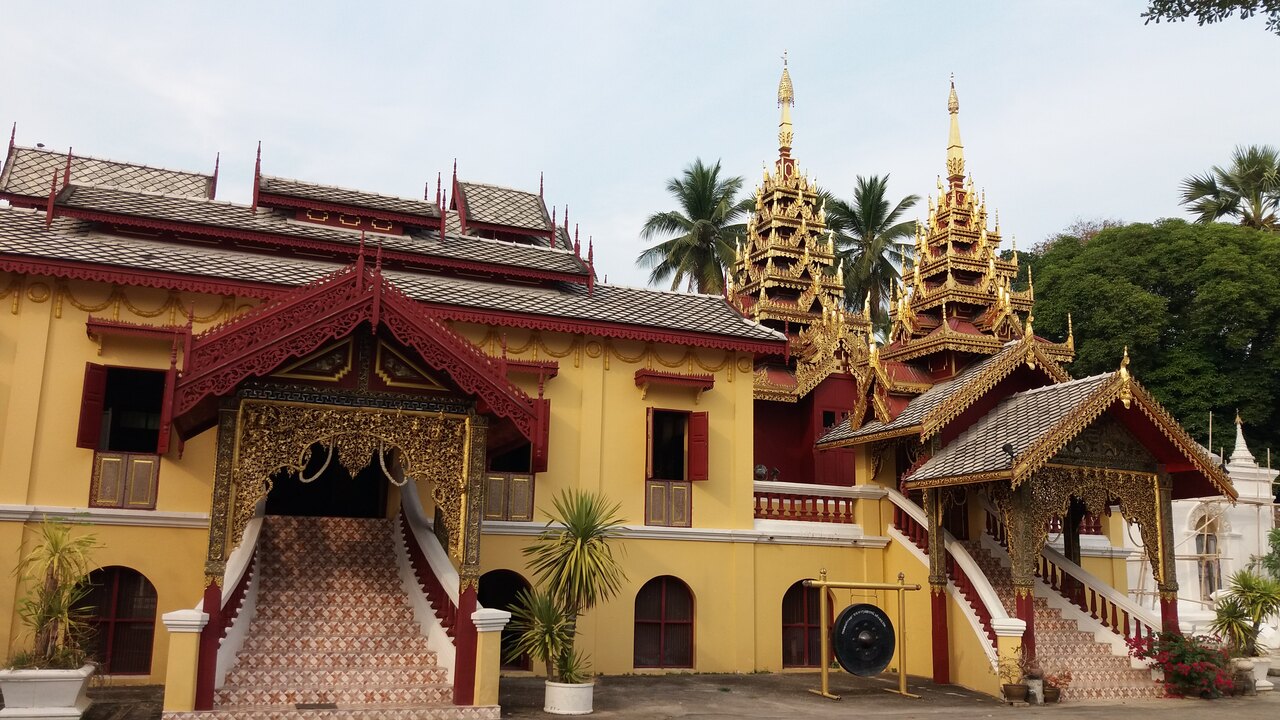
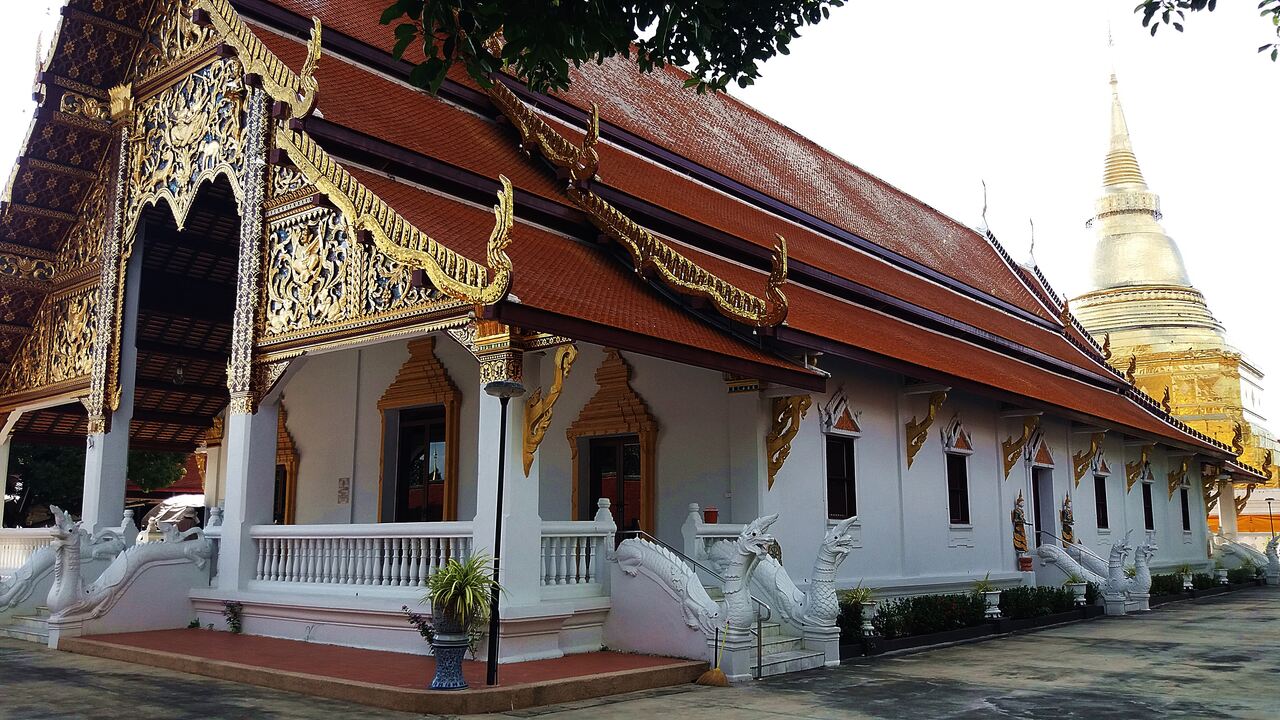
This building was probably built in 1900. A characteristic element is the roof, typical of Burmese temple architecture. It has 7 layers to the top. Also noteworthy are the tympanums with floral and mosaic patterns and the carvings on both sides of the stairs.
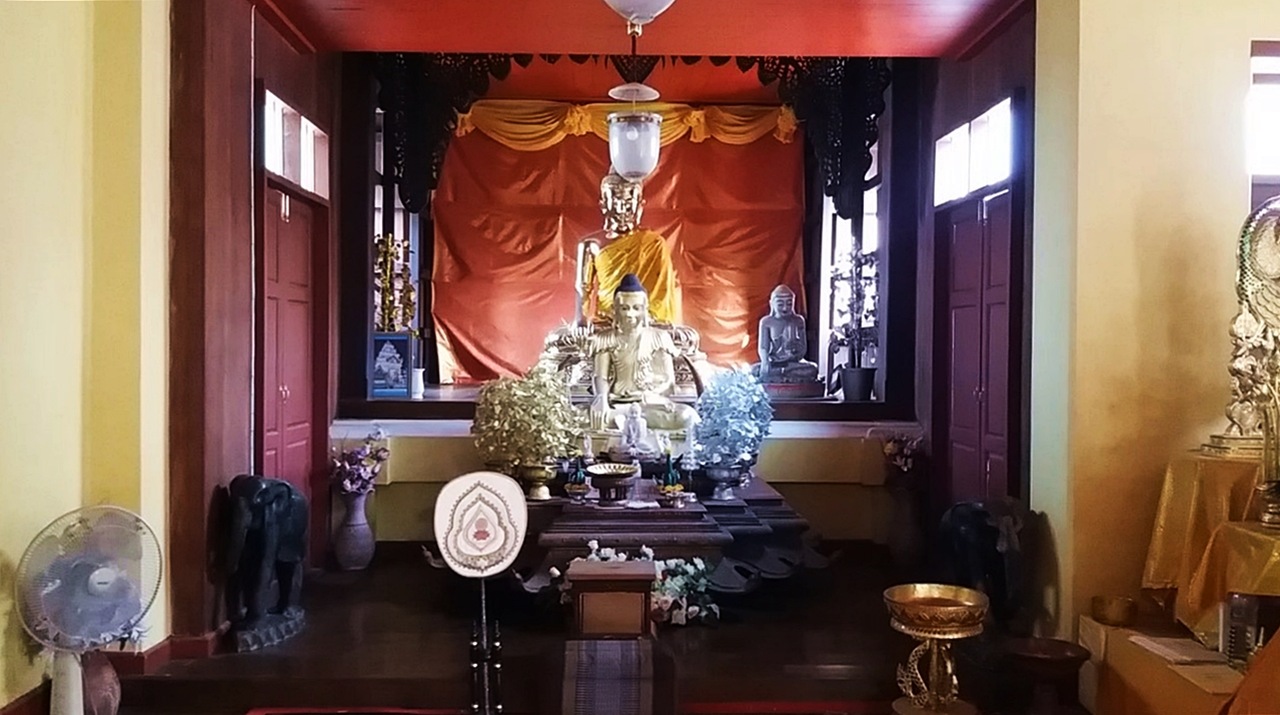
Inside, you can see various images of Buddha. The main statue is located in the center, where the 7 layers of the roof meet. Another monument shows the Enlightened One in a stance in which he subdues Mara. In addition, there are artfully decorated pillars and other statues.
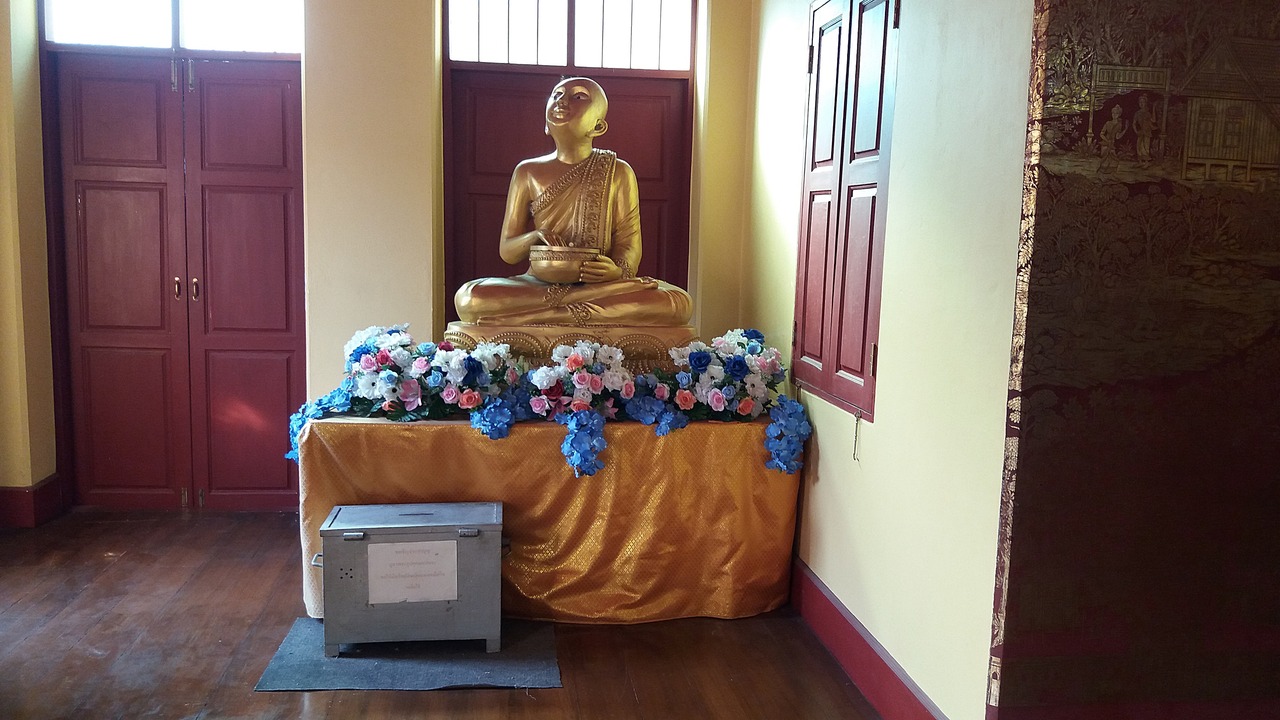
The viharn is built half of brick (lower parts) and half of wood (upper parts).
Fire at Wat Sri Chum
Unfortunately, the former wooden temple was destroyed by fire. In the early morning of January 16, 1992, a fire consumed much of the building. Only the decorated entrance to the Viharn remains.
The renovation of the temple was carried out in 1995-96 by the Fine Arts Department.
Ubosot
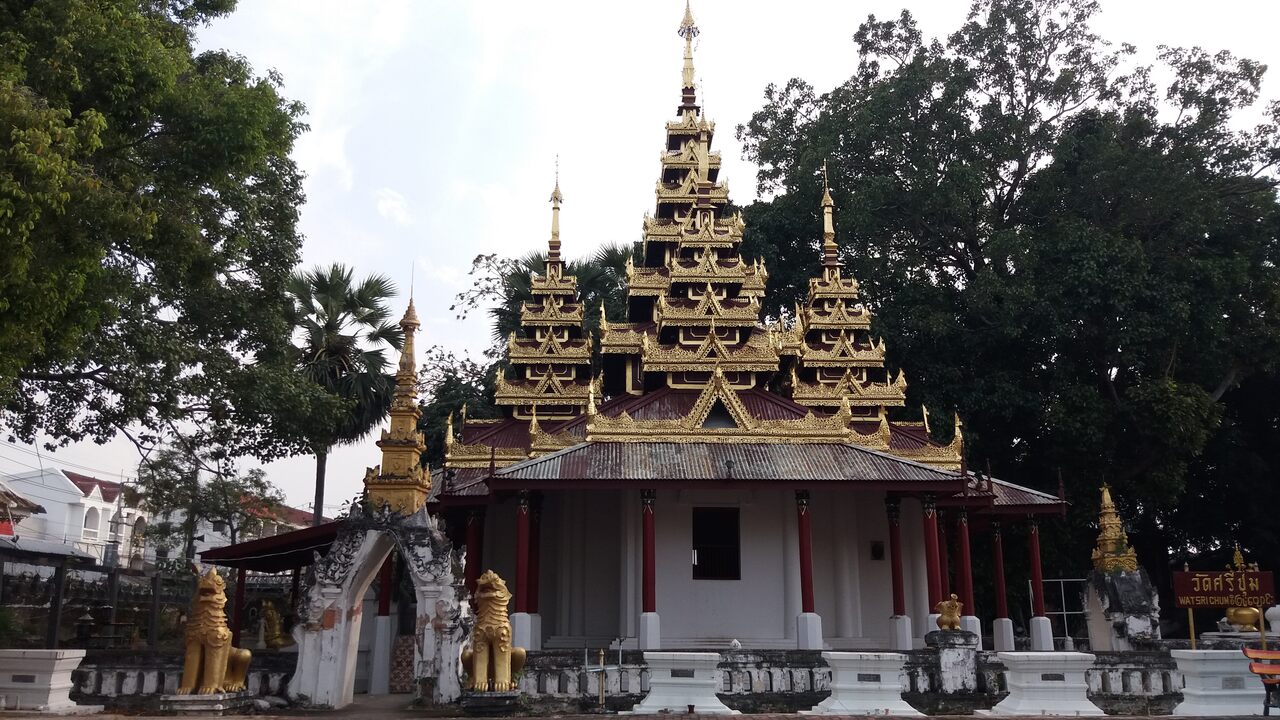
Another building in the Burmese style. Like Viharn, Ubosot has a similar multi-level roof – the porch roofs have 5 levels. Inside is a statue of Buddha in the Māravijaya posture. It is also worth paying attention to the ceiling. It is decorated with beautiful glass patterns.
The building was not destroyed by fire in 1992, so it is preserved in its original condition.
Pagoda
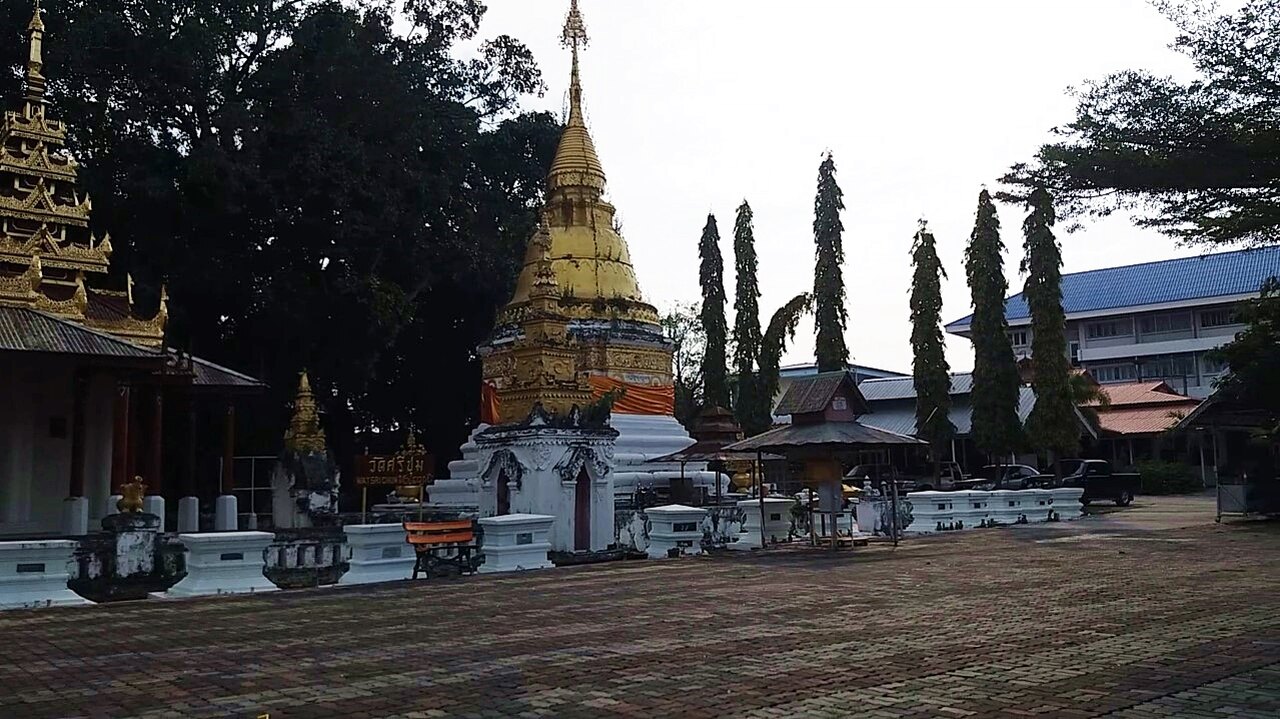
Next to the Ubosot is a pagoda made of brick and mortar. Inside the chedi, there are Buddha relics brought from Burma in 1906. Stucco patterns can be seen around the bell-shaped neck. The construction of the pagoda took place in 1901.
Wat Sri Chum – meaning of the name
I mentioned earlier that previously there was only a pavilion, a pond, and Bodhi trees in this place. The trees were partly responsible for the name. In the Lanna language, the word Sri means Bodhi tree. Chum, on the other hand, is short for chumnum. The word means gathering, surroundings.
Wat Sri Chum in Lampang – summary
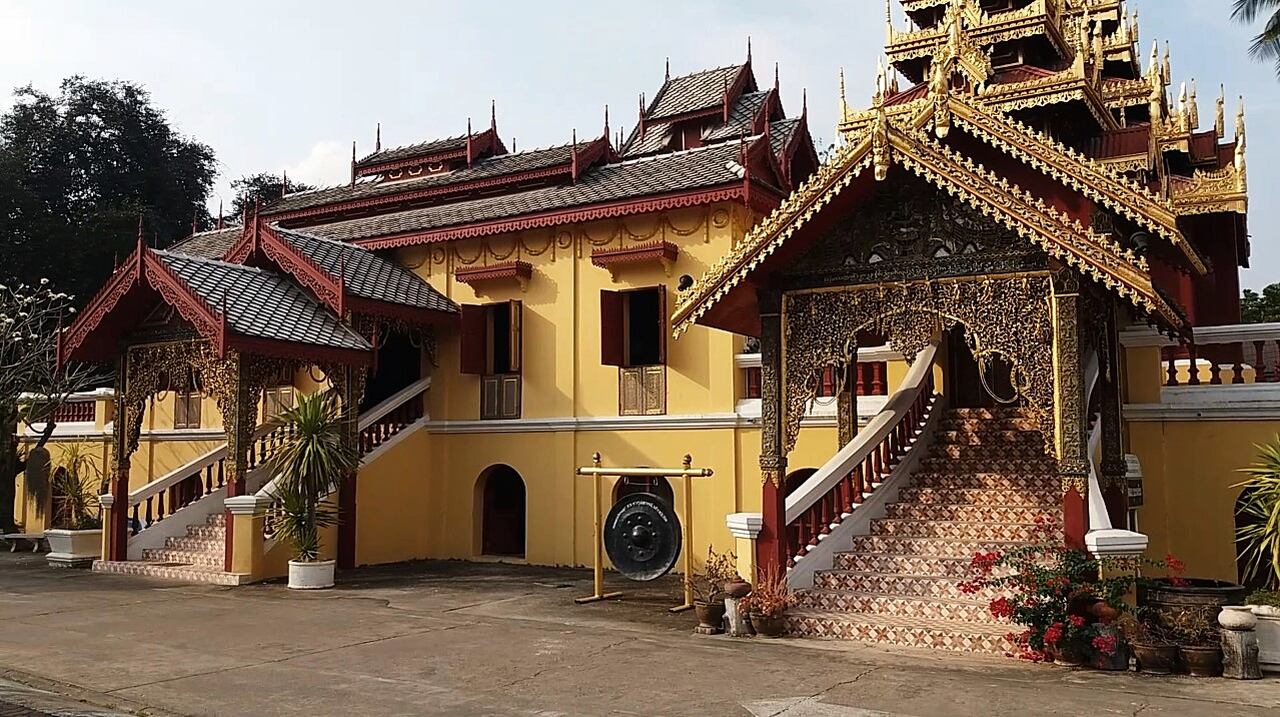
Lampang is the place where you can find the most Burmese-style Buddhist temples in Thailand. Wat Sri Chum is one of them and the most impressive. It’s worth making a trip to the temple when visiting Lampang. This is a great opportunity to see unique architecture and learn about the past of this tourist attraction. We wish you a pleasant trip.
Also check out other temples in Lampang ⇒ in this section.