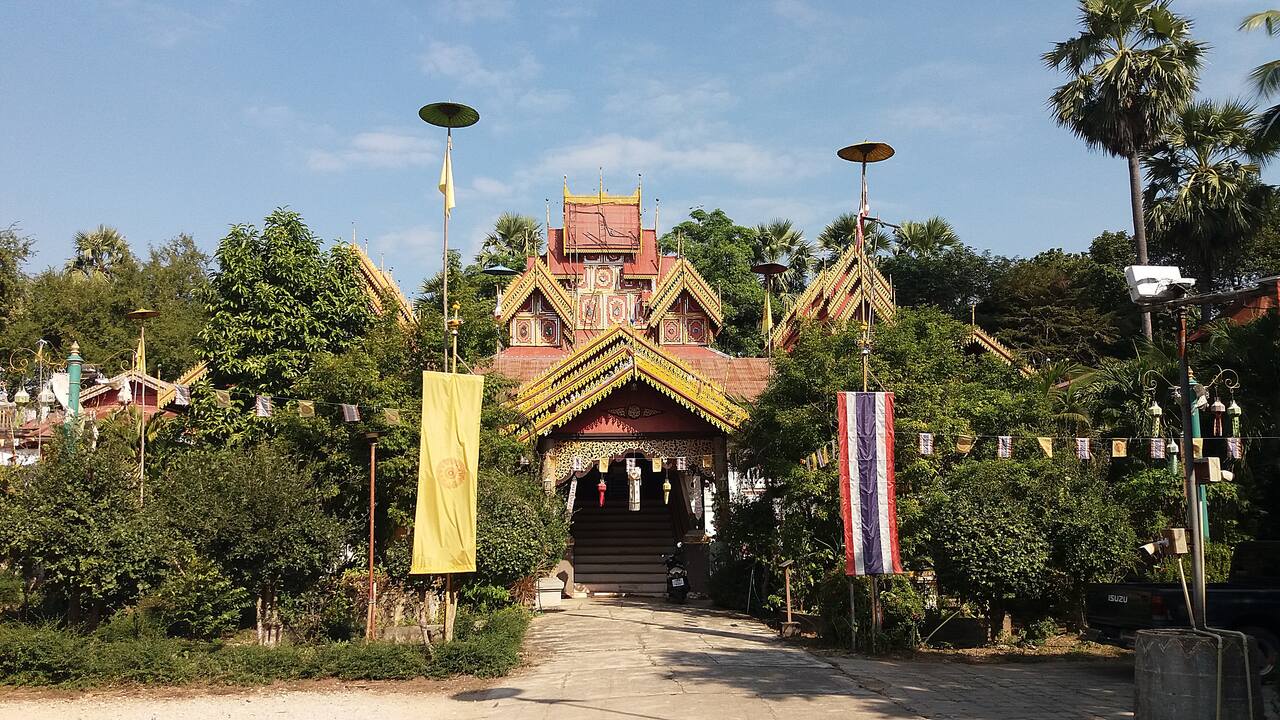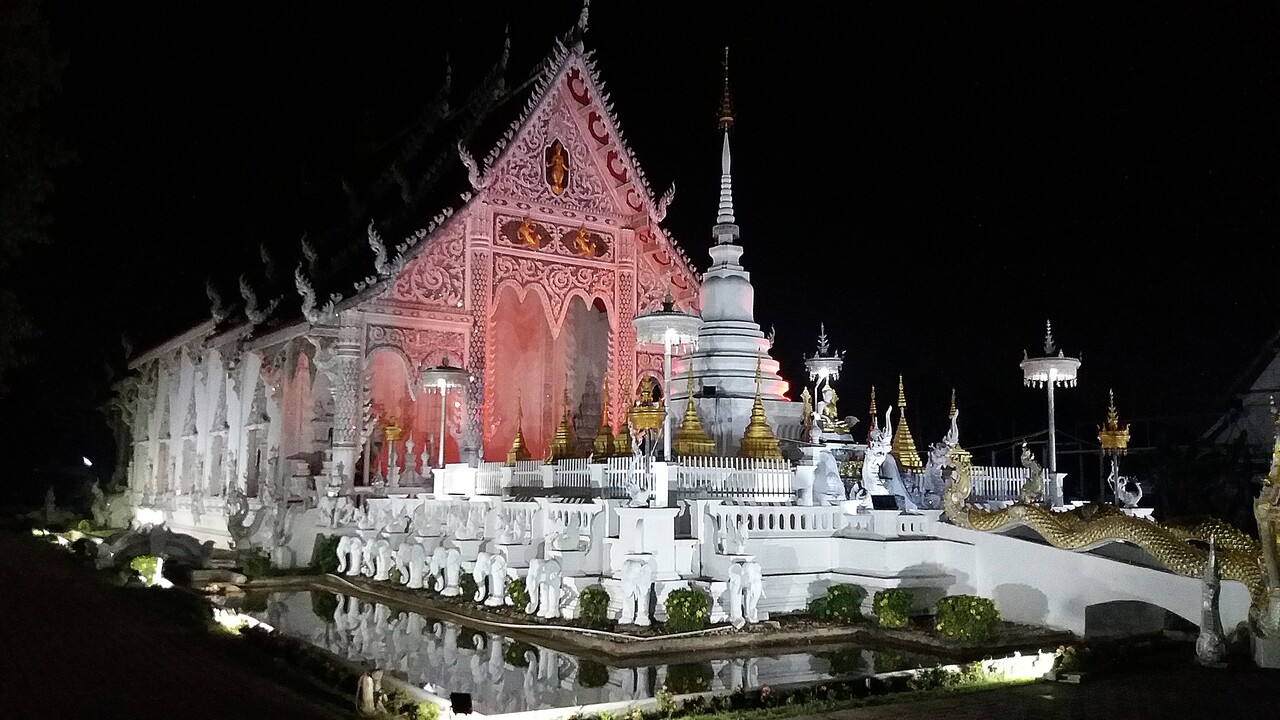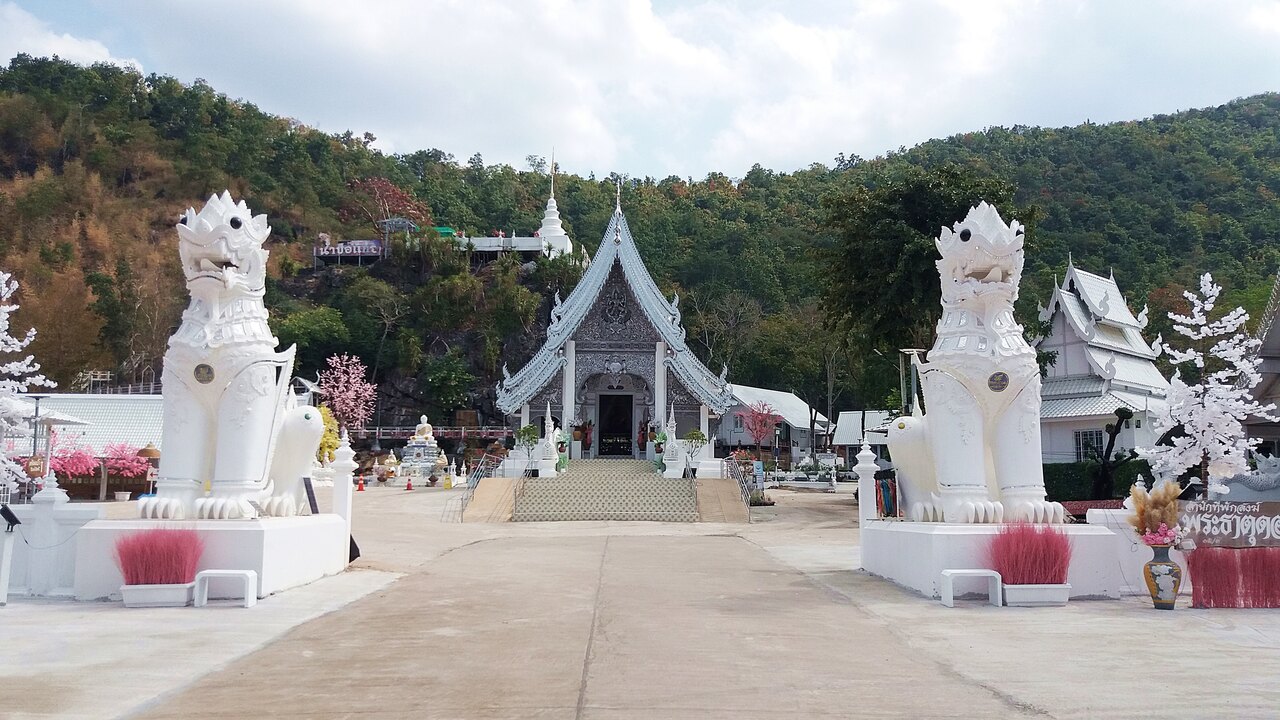

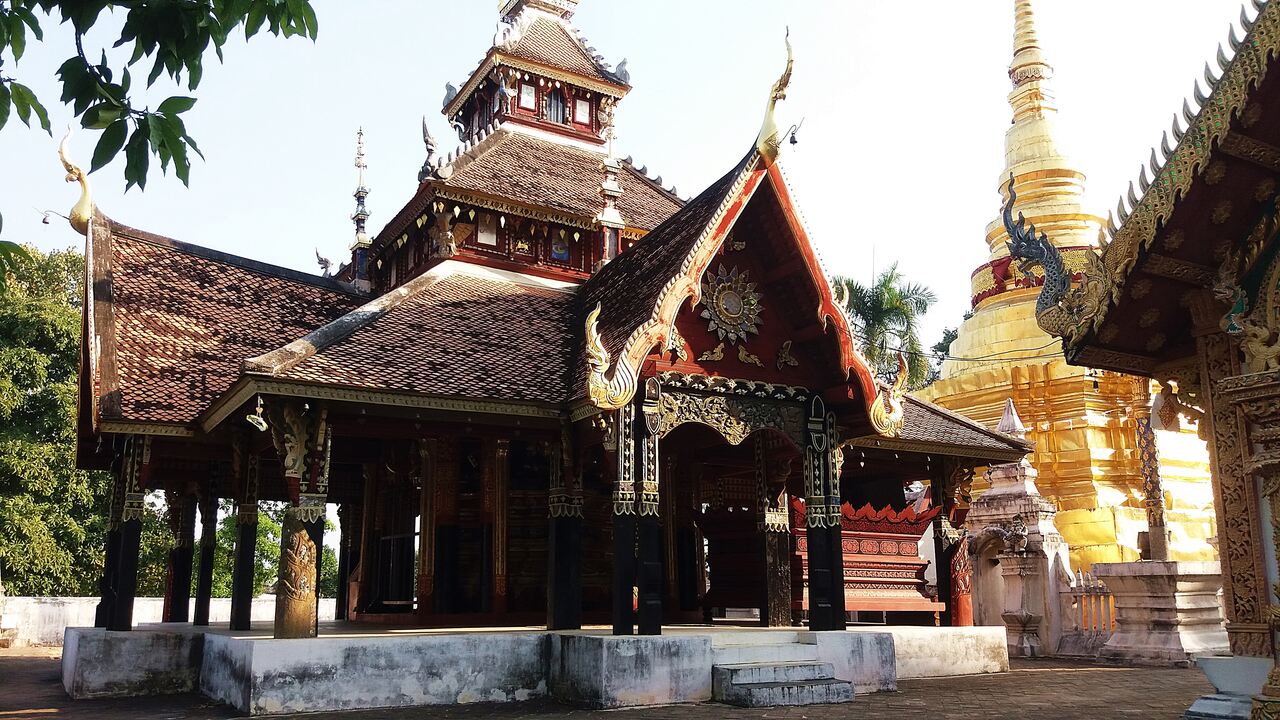
Wat Pong Sanuk Nuea and Wat Pong Sanuk Tai are important places for the citizens of Lampang, although they are less known to foreign tourists. Both temples are located next to each other and practically form a single complex. This article will explore what makes them so unique, and the FAQ section will answer practical questions.
Wat Pong Sanuk – a precious Buddhist monument in Lampang
Although the names Wat Pong Sanuk Nuea and Wat Pong Sanuk Tai might suggest that they are separate sites, this is not the case. In Thai, the word nuea means north, and tai means south. The names simply indicate which side of the temple complex each structure is located on.
History of the temple
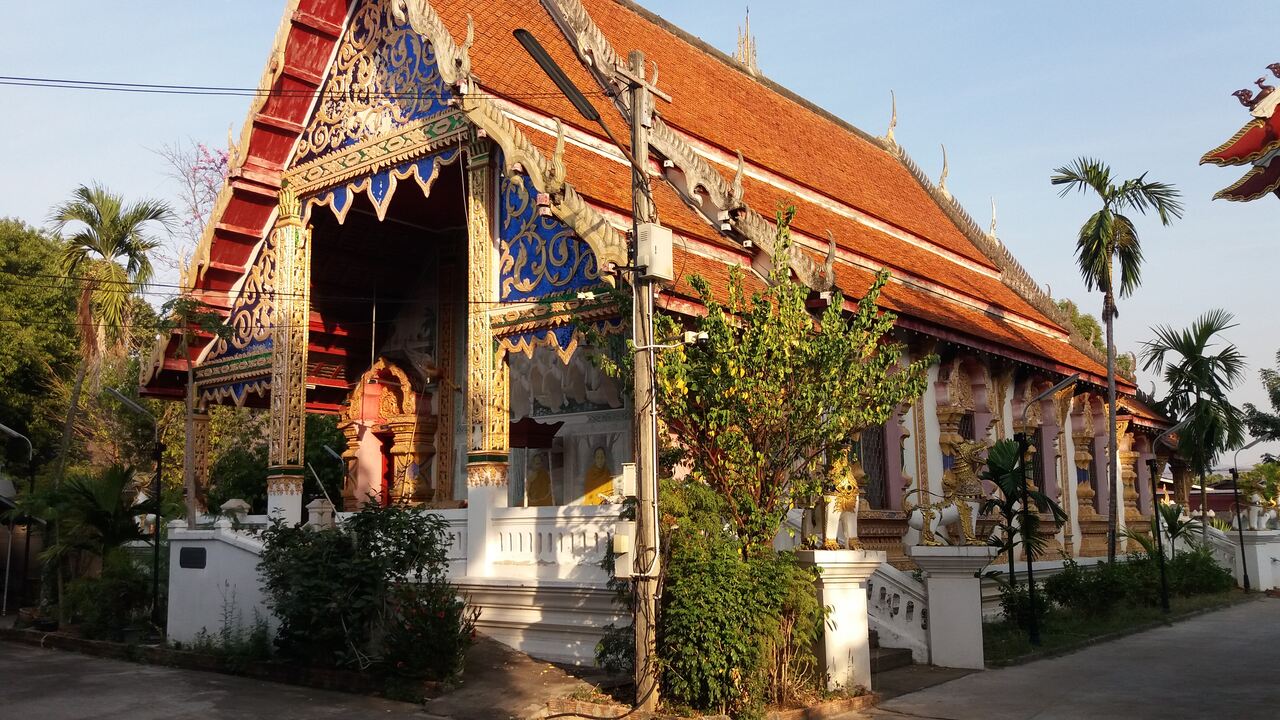
The origins of this place probably date back to the times when the city of Lampang was founded in the 7th century. The Hariphunchai Kingdom was also formed during this period, with its first monarch being Queen Camadevi (or Jamadevi). Hariphunchai’s capital was the city of Lamphun, located near Lampang. It was the queen’s son, Anantayot, who became the first king of Lampang and ascended the throne around 680.
It was during his reign that the place was founded, which originally had four names: Wat Si Chom Klai, Wat Chiang Phum, Wat Don Kaeo, and Wat Phayao. In the following centuries, the temple was abandoned until 1777, when it was renovated.
Later periods and the meaning of the name Wat Pong Sanuk
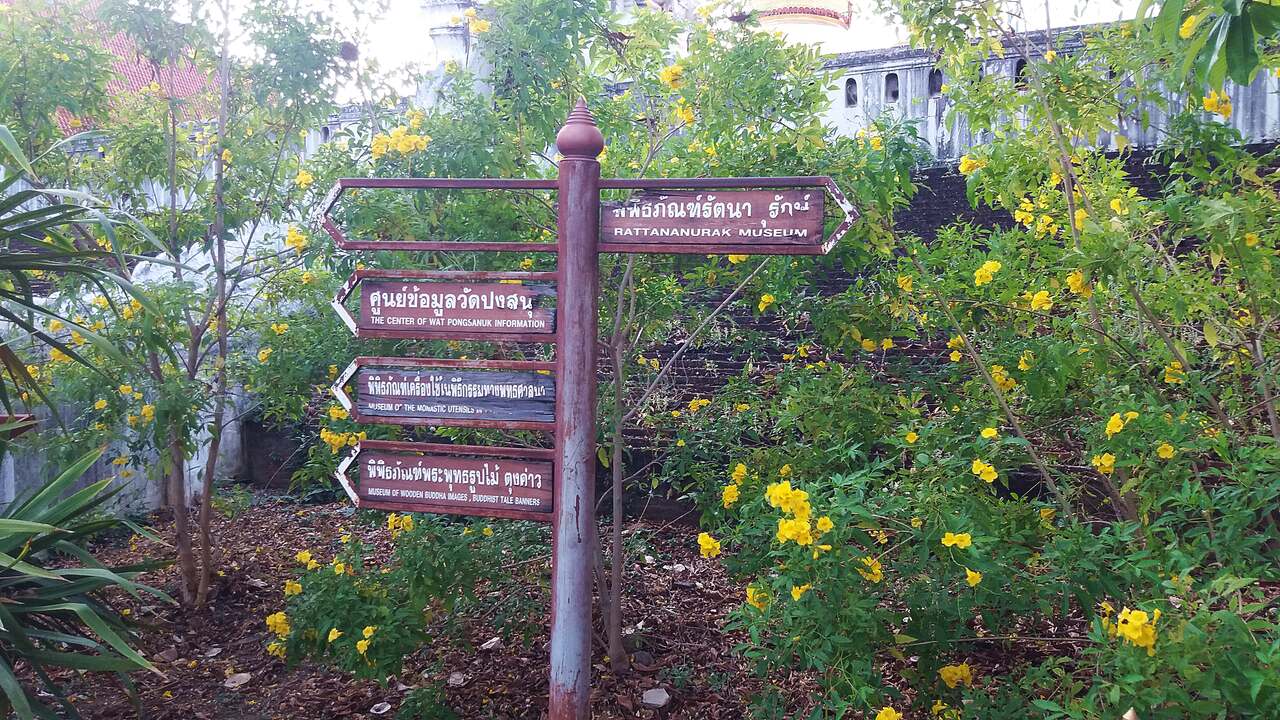
According to historical sources, around 1803, King Kawila, the first ruler of Chiang Mai from the Thipchak dynasty, led an army to attack the Burmese stronghold at Chiang Saen. He gathered the people of Chiang Saen north of Lampang, which included the people of the village of Ban Pong Sanuk. Furthermore, the Phayao people fled the Burmese and also settled north of Lampang. Thus, the Ban Pong Sanuk, Chiang Saen, and Phayao peoples jointly formed the village.
In the following years, around 1843, Phayao was reconquered, and the Phayao people returned to their hometown. The people of Ban Pong Sanuk village, however, remained in Lampang. As a result, the name of the temple and village was shortened to Pong Sanuk. The temple was then divided into north and south sides. Due to the large influx of monks and novices, the decision was made to divide it into two temples, each intended to support the other.
Pong Sanuk means the Clan of Joy, and the name Wat Pong Sanuk can be translated as Temple of the Clan of Joy.
It is also worth noting that it was here in 1857 that the first city pillar was placed, which is now located at the Lampang City Pillar Shrine along with two other pillars.
UNESCO Award
On November 16, 2006, the temple’s abbot, Phra Khru Sophit Khantayaphon, received the Award of Merit in the UNESCO Asia Pacific Heritage Awards category. In particular, he was recognized for the excellent preservation of the wooden Vihran Phra Chao Phan Ong – Temple of the Thousand Buddhas. It is the only ancient structure of its kind in Thailand preserved in such good condition.
Wat Pong Sanuk – what monuments are within the temple complex?
Arched entrance gate
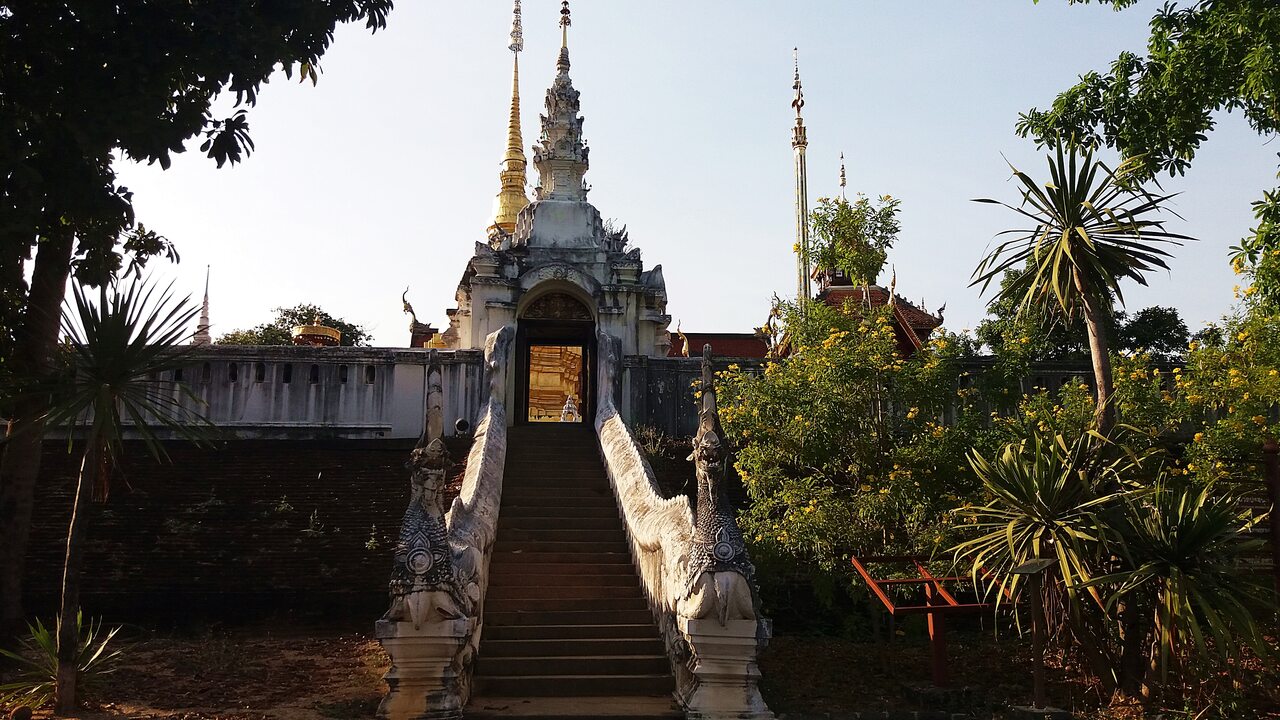
As you head towards the entrance, you’ll see a distinctive, beautifully crafted arched gate. On either side of the stairs leading up are images of Nagas guarding the sacred site. This is one of many common and essential architectural elements of every Buddhist temple in Thailand.
Chedi
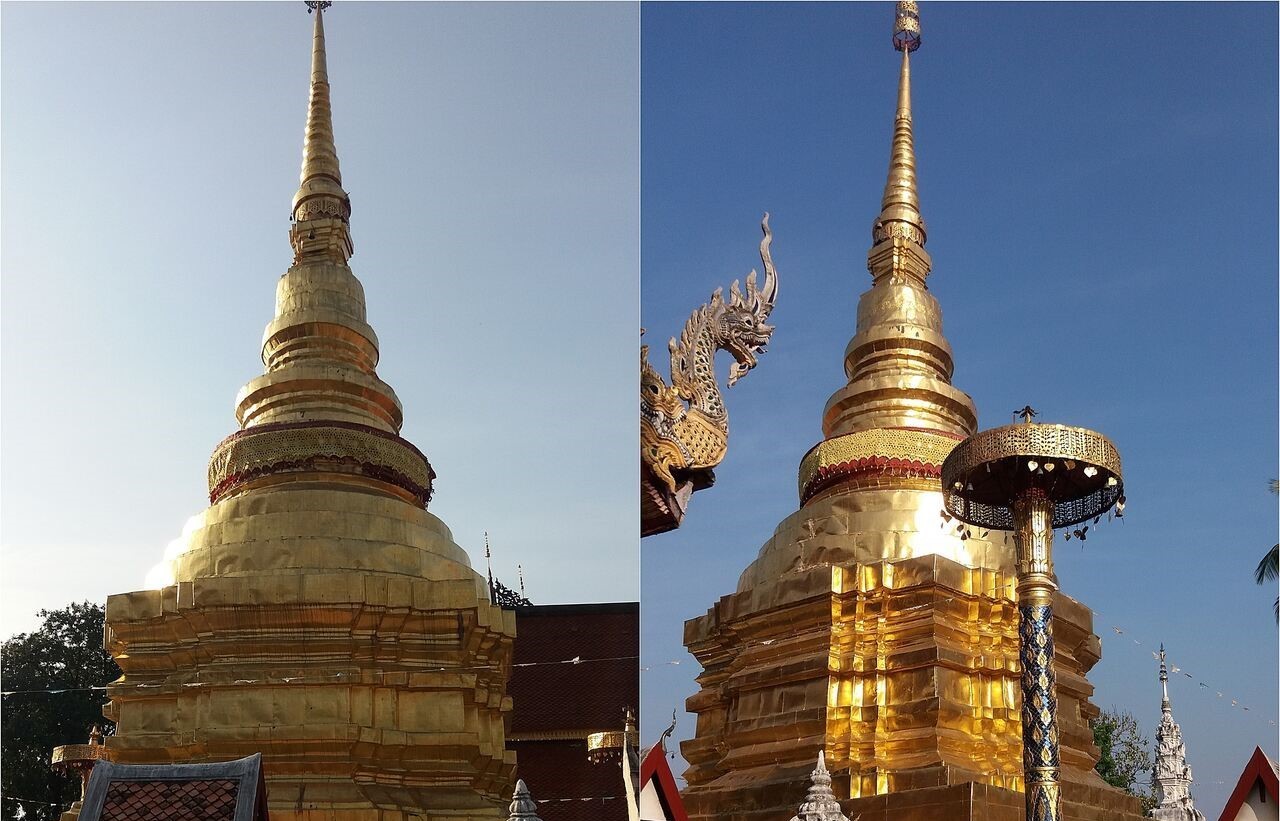
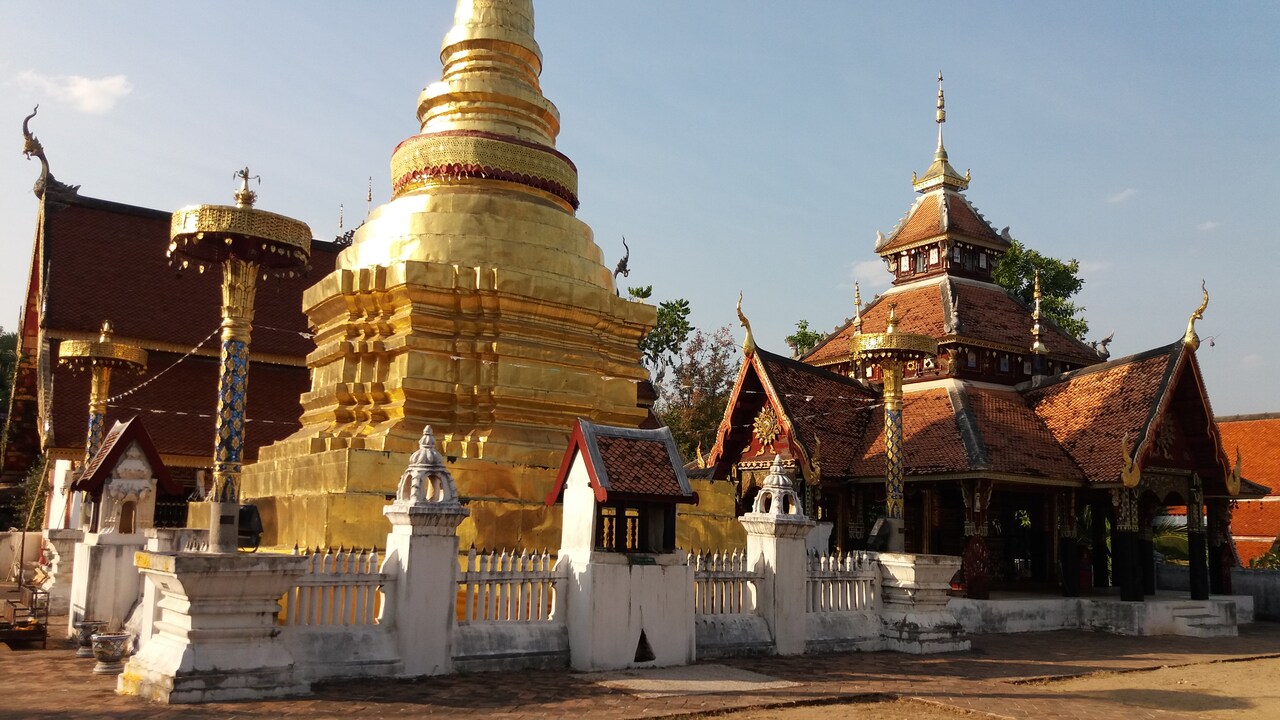
After passing through the gate, you will enter an area symbolizing the sacred Mount Meru. Several important structures at Wat Pong Sanuk are located here, one of which is a golden chedi. The square base has a recessed lotus-shaped plinth. Above it, another lotus-shaped base supports a bell-shaped body. The top is decorated with metal carvings.
Viharn Phra Chao Phan Ong
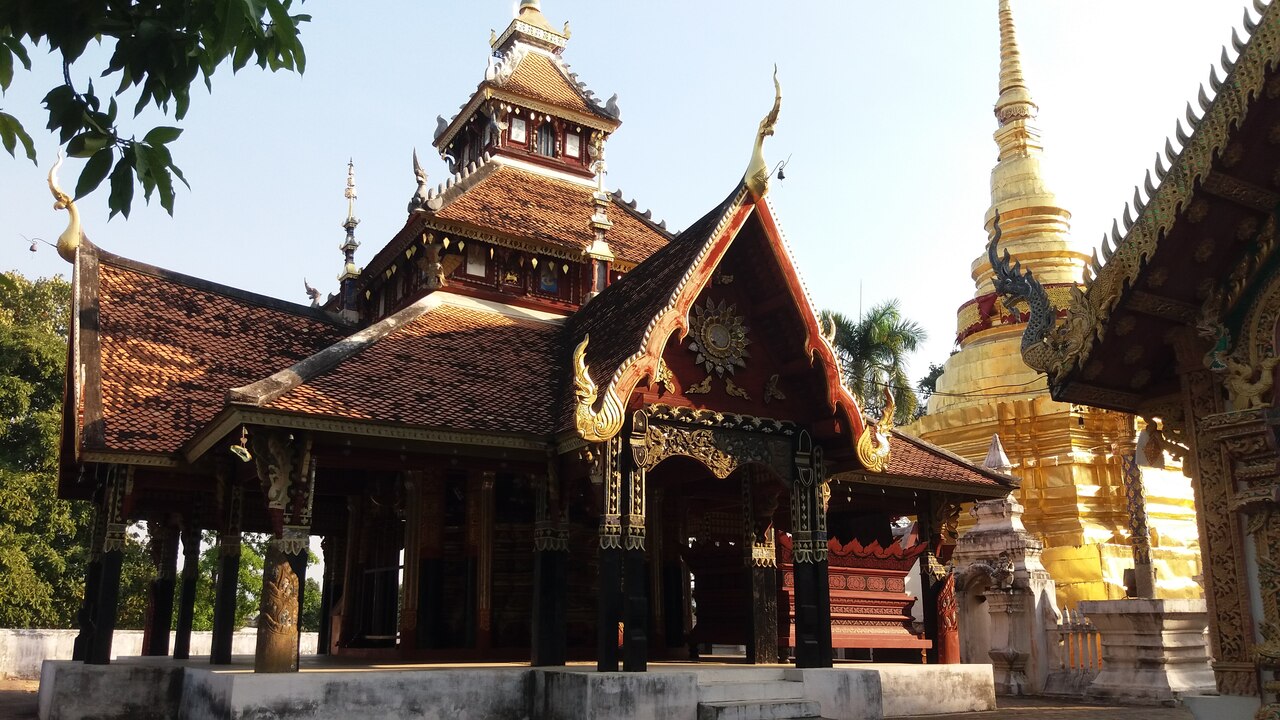
This UNESCO-awarded building, described earlier, is designed as a quadrangular wooden hall and boasts a blend of several architectural styles: Lanna, Thai, Burmese, and Chinese.
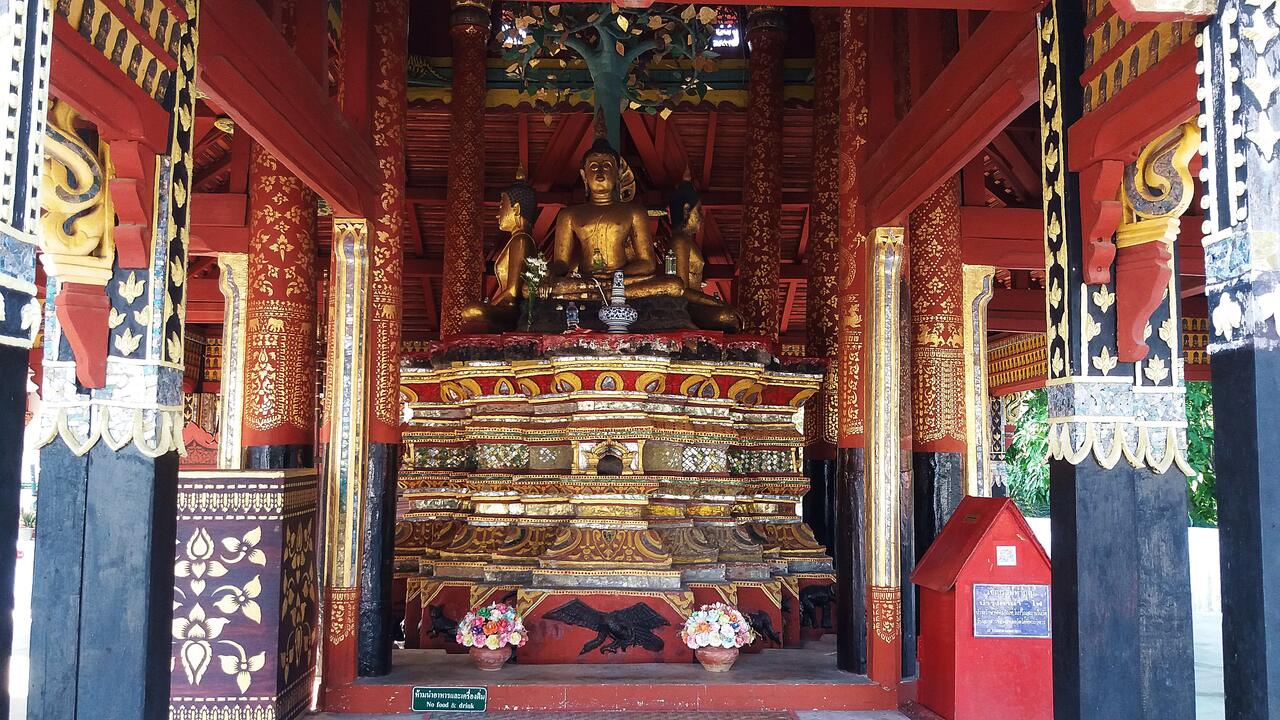
Inside, you’ll see an open pavilion containing four Buddha images facing each of the four cardinal directions. The statues represent the four Buddhas who achieved enlightenment in the last four eras. In the center, between the statues, sits the sacred Bodhi tree, symbolizing the future incarnation of Phra Sri Ariya Maitreya. This is the Thai name for the future Buddha.
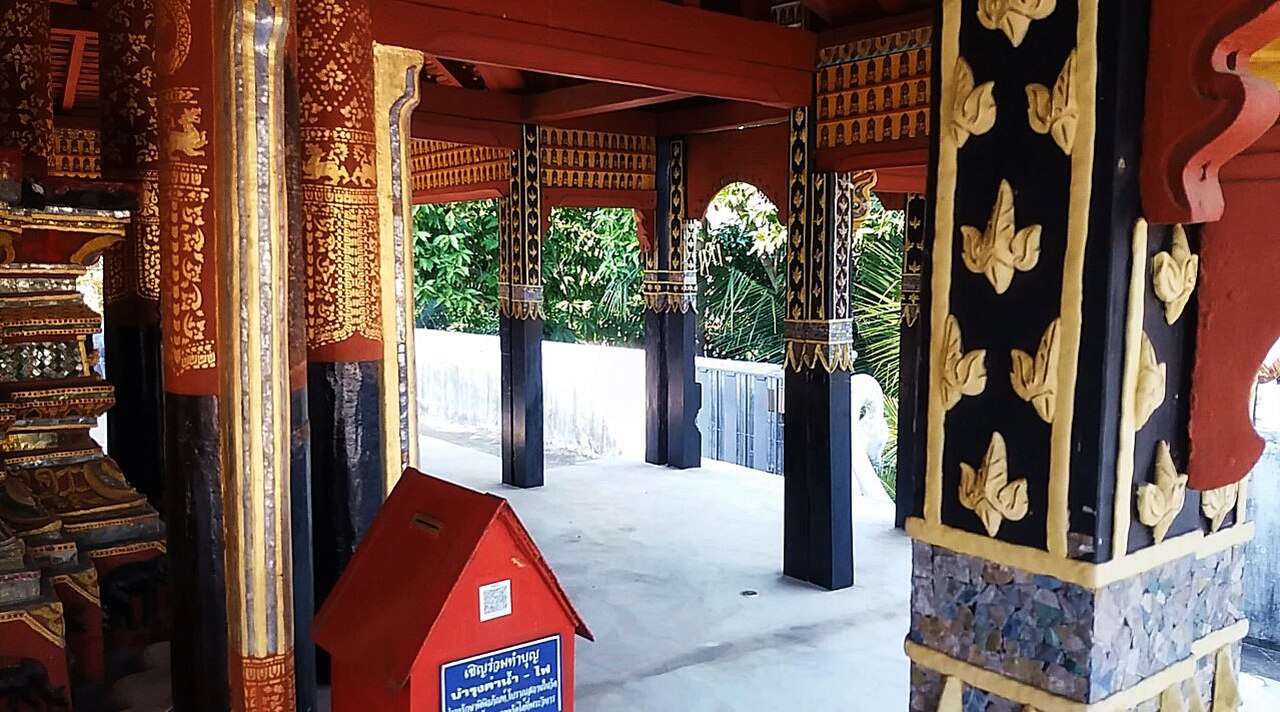
The roof, meanwhile, consists of three layers with intricately decorated square pillars. A striking feature is the sight of 1,080 small metal Buddha images inside and on the building’s facade.
Temple of the Reclining Buddha
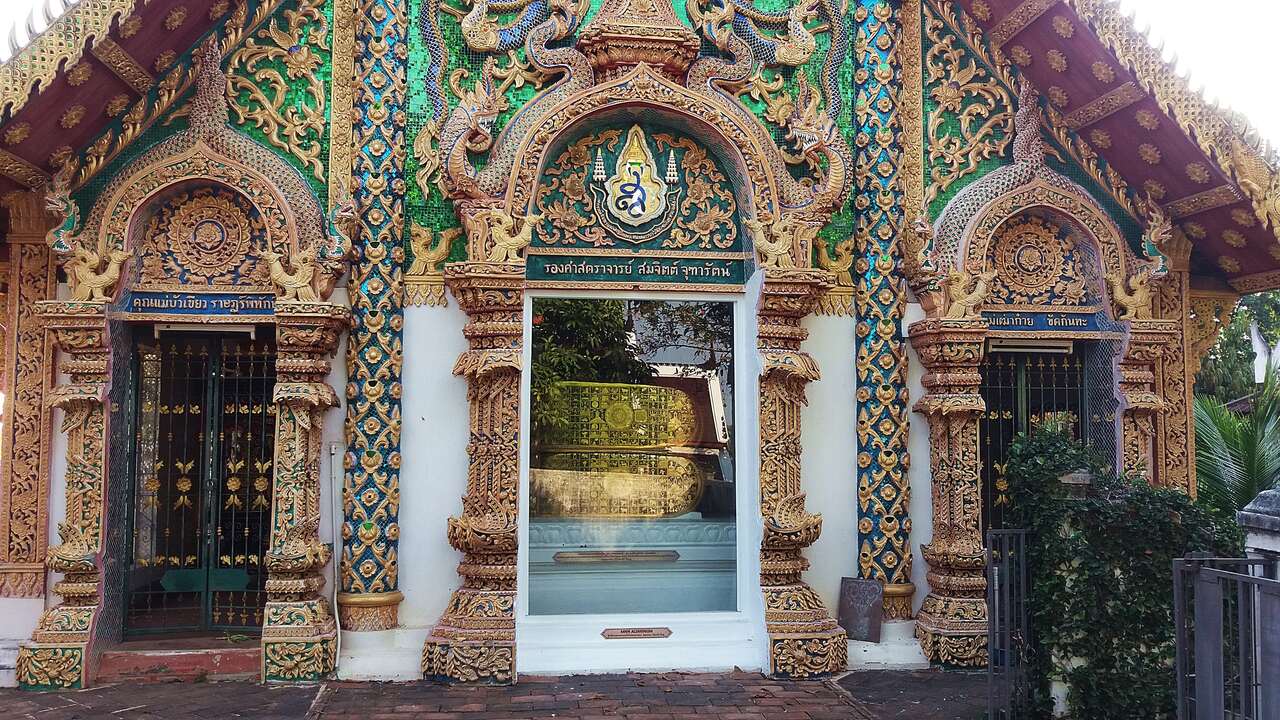
Next to the Chedi and Viharn is the small Temple of the Reclining Buddha. Inside, a statue of the Enlightened One is placed in a characteristic reclining posture.
Other structures at Wat Pong Sanuk
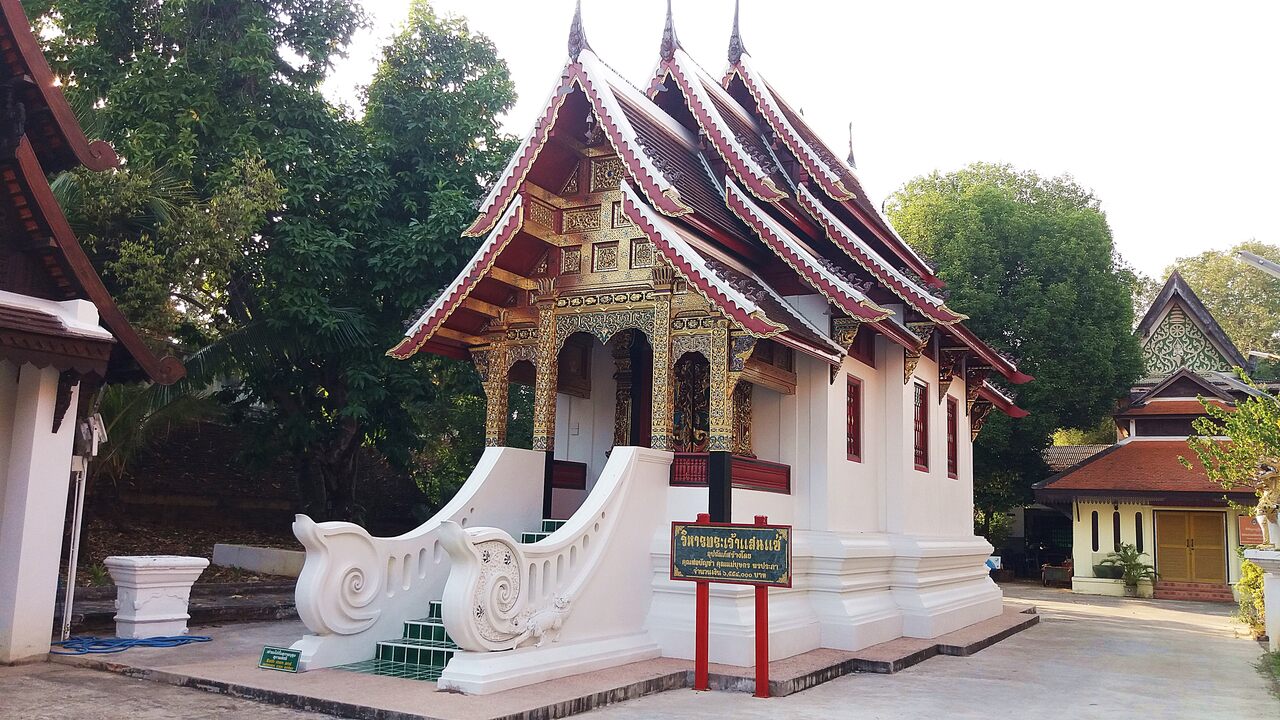
The temple complex also includes other valuable and beautiful structures, such as the library, the Tripitaka Hall, the monks’ quarters, and many others. Therefore, it is recommended to visit the entire complex, which houses these valuable monuments.
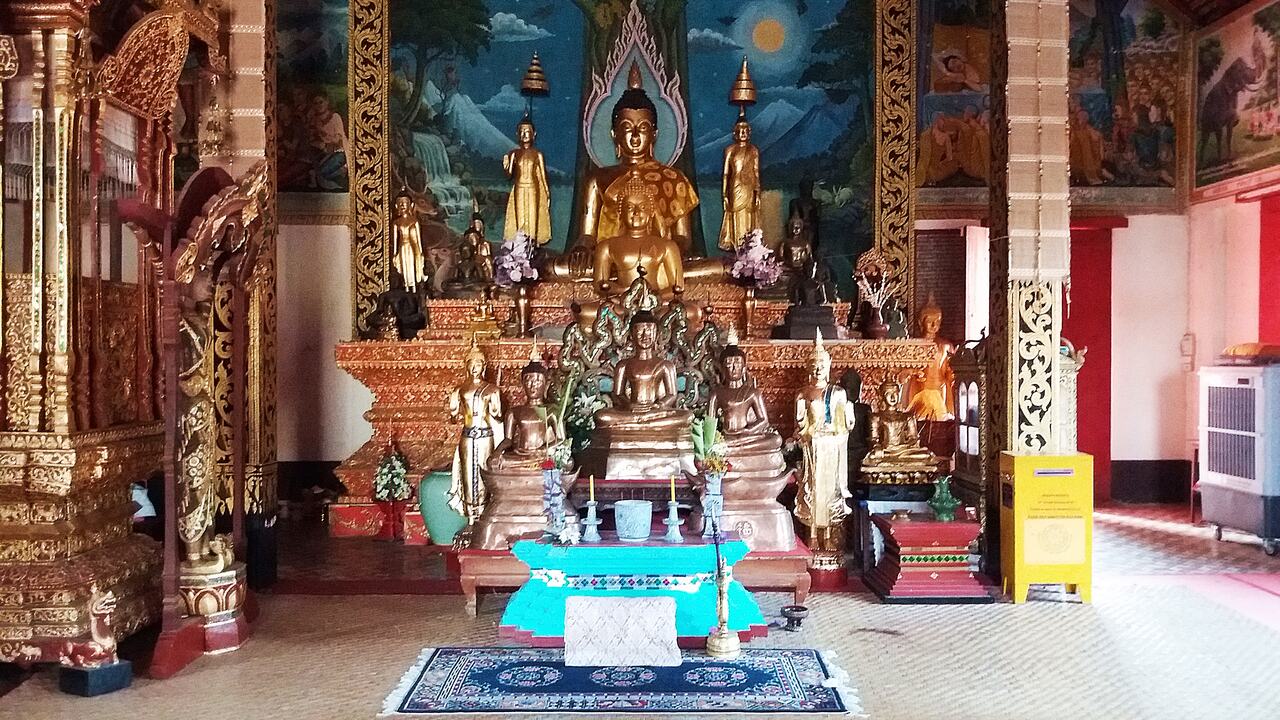
Moreover, Wat Pong Sanuk, apart from its outstanding architecture, is also famous for possessing beautiful and valuable works of culture and art, such as wall paintings depicting the story of Prince Vessantara on canvas and mulberry paper, wooden statues of Buddha, and ancient Dharma boxes.
Wat Pong Sanuk – summary and FAQ
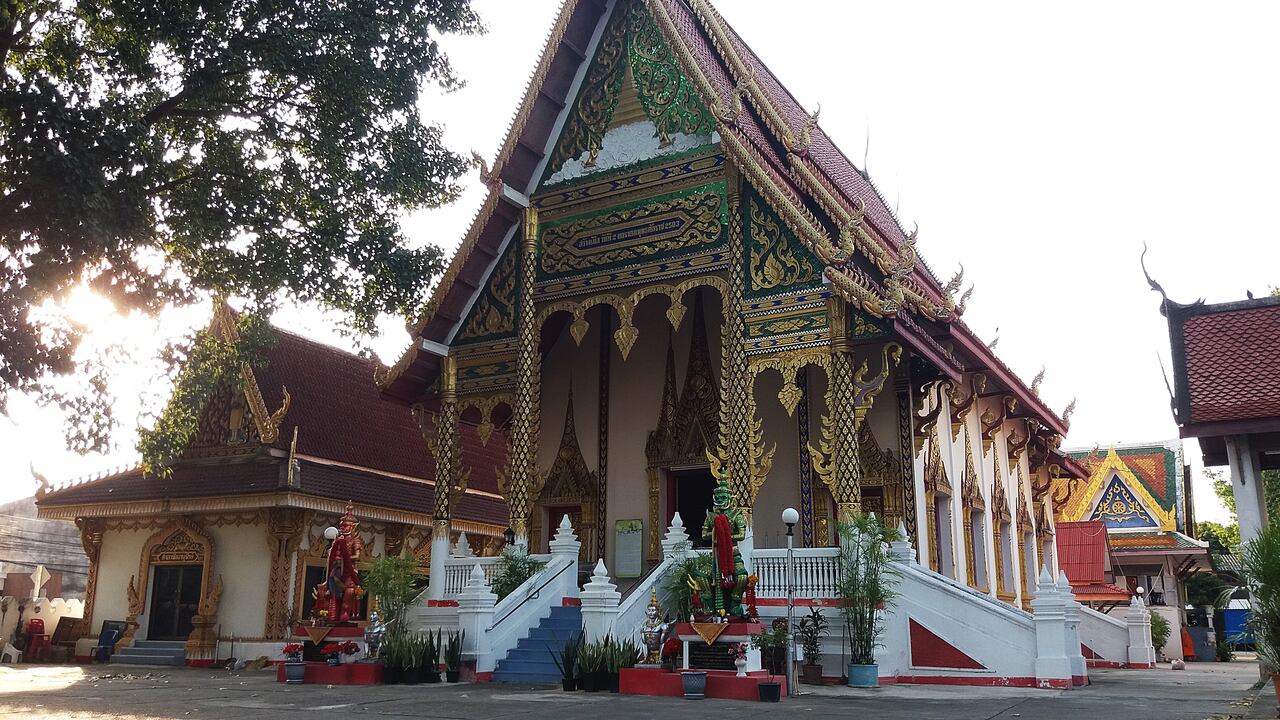
This historic and beautiful temple is one of Lampang’s many treasured sites, yet it remains little known to foreign tourists. It’s worth visiting to admire the incredible architecture and learn about the history of Wat Pong Sanuk, especially since the temple is located practically in the city center and close to other tourist attractions. We invite you to visit and wish you a pleasant experience exploring this gem of a city. Have a nice stay.
FAQ
Where is Wat Pong Sanuk?
The temple is located at 60 Pong Sanuk Rd. in the Wiang Nuea Sub-District.
How can I get to the temple?
Due to its proximity to the city center, the temple can be reached by taxi, songthaew, or carriage.
What are the opening hours of Wat Pong Sanuk?
Every day from 6 a.m. to 6 p.m.
Is there an admission fee?
No, there is no entrance fee.
What other tourist attractions are near Wat Pong Sanuk?
Just over 500 meters south are Ratsada Phisek Bridge, Wat Koh Walukaram, and the famous Kad Kong Ta Night Market.
A little further south is the Museum Lampang and Lampang City Pillar Shrine. The distance is about 1.3 km.