
Wat Phra That Lampang Luang is a very important place with a rich history and great significance. This ancient temple in Lampang Province is a perfect example of Lanna architecture with well-preserved original buildings. A visit here is a must, and this article will take a closer look at this attraction.
Wat Phra That Lampang Luang – historical background
There are several versions regarding the date of the temple’s foundation. Some historical sources indicate the 15th century, while according to other information, Wat Phra That Lampang Luang was founded in the 13th century. There is also a legend about the earlier beginnings of the temple, when the northern territories of present-day Thailand were called the Hariphunchai Kingdom.
Legend suggests that the temple has been a place of worship since the 7th century. During this period, the Hariphunchai Kingdom was founded and ruled by the kingdom’s first queen, Camadevi. By order of the Queen, the city known today as Lampang was built. The temple thus became part of the city ruled by her son.

In 1732, when Burmese armies captured the nearby cities of Chiang Mai and Lamphun, the Burmese king turned his attention to Lampang. He ordered the city to be occupied, which was deserted and had no ruler.
The enemy army set up camp at Wat Phra That Lampang Luang, not expecting an attack from the defenders. Phraya Chaisongkhram, formerly known as Thipchang (Divine Elephant), gathered his troops and sneaked into the temple. As a result of this raid, he shot the ruler of Lamphun, who commanded the Burmese, and his troops defeated the invaders.

Thipchang became the ruler of Lampang and started the Chet Ton dynasty, or officially Thippachak.
Today, a statue of Thipchang, who became a hero, can be seen in the temple complex. Moreover, bullet marks visible on the walls are evidence of these turbulent events.
Legend of the Buddha

There is another local legend related to the origins of the temple. According to this story, the Buddha came to this region with several of his disciples, the arahants. At that time, the Enlightened One decided to stay at the top of Doi Mon Noi.
There was also Ai Kon, a Lua man who was very devoted to the Buddha. Once, Ai Kon brought honey in a bamboo tube and four coconuts. When the Buddha had eaten the honey, he threw the tube towards the north and predicted that a city called Lampakappa would be built there. Then the Enlightened One rubbed his head and gave Ai Kon a lock of hair. It is believed that relics of Buddha’s hair and other valuables are still kept at the base of the chedi in the temple.
Wat Phra That Lampang Luang – visiting the temple’s historic buildings
Kong Gate and walls

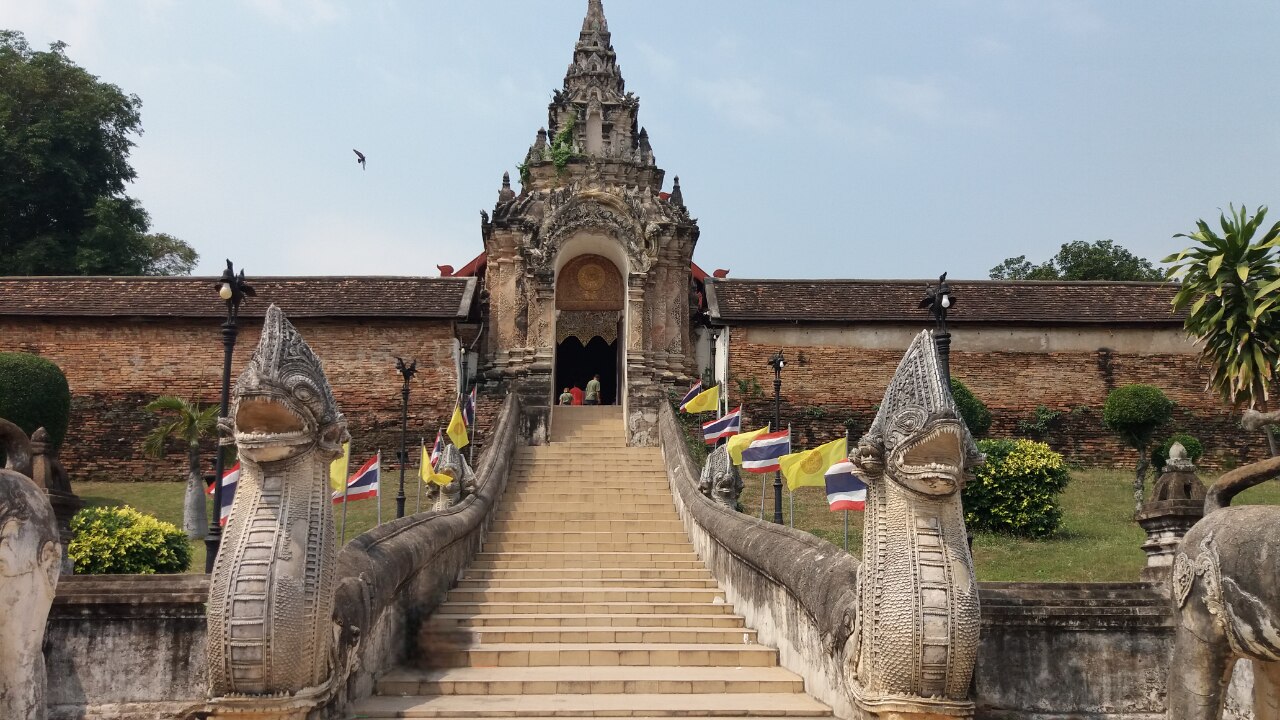
When you get there, you’ll be greeted by an impressive view. Since the temple was once fortified, you can see well-preserved walls. Roughly in the middle are the steps and the Kong Gate, made by ancient royal craftsmen.

This structure is made of brick and mortar and has an arched shape. It is decorated with stucco floral motifs and images of mythical animals.
The gate is considered one of the most beautiful of its kind in Thailand. It also appears in the seal and flag of Lampang Province.
Phra Viharn Luang

After passing through the gate, you’ll see a large building. This is Viharn Luang, built in the second half of the 15th century. The structure has a three-tiered roof and is open on all sides, which is characteristic of early Lanna architecture. It is supported by concrete pillars that replaced the former teak pillars.

Inside the Viharn is a sanctuary where the main Buddha statue called Phra Chao Lan Thong is placed.
Also noteworthy are the ornate pillars and wall paintings depicting Jataka tales about the Buddha’s previous lives. Additionally, the Viharn has many other statues of the Enlightened One and exhibits.
Chedi at Wat Phra That Lampang Luang

Another Lanna-style structure, although it also has influences from Sri Lanka and Sukhothai architecture. The Chedi is probably the oldest structure in the temple complex. It is 45 m high and covered with copper and bronze sheets.

The exact date of the construction of the chedi is unknown. Local people believe that it was there several centuries earlier, before the other buildings were built. It is known, however, that in 1449 the stupa was restored and enlarged, which may indicate its much older age.
The chedi is an important object in the temple because it is here that relics in the form of Buddha’s hair and valuables are kept.
Viharn Nam Taem

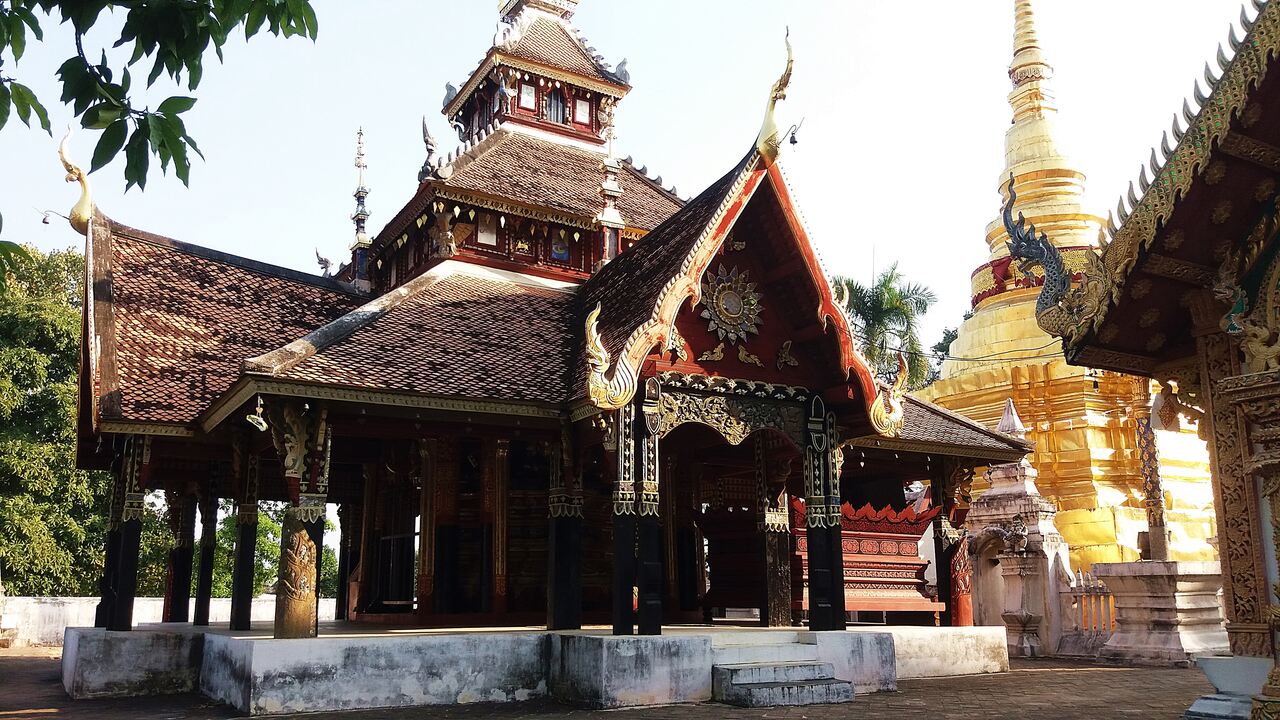
This is a satellite temple located on the northern side of Viharn Luang and the chedi. It was built in 1501 and is also called the Temple of Painting – taem means painting.
Important. Viharn Nam Taem is considered to be the oldest wooden temple building in Thailand. This structure is preserved in its original condition.
Like the adjacent large Viharn, it has no walls and is made in the Lanna style.
Inside is the main image of Buddha in the Bhumisparśa attitude, surrounded by other statues of the Enlightened One.
In addition, there are wooden panels with paintings of Lanna art, which are said to be the oldest in the country.
Viharn Phra Put

The building is located next to the chedi, but on the southern side, and is relatively new. This temple was built on the site of an older structure, and its construction dates back to 1802. Despite this, old wooden pillars still support the temple.
Statues of oxen were placed in front of the entrance, and this is not without significance. The construction of Wat Phra That Lampang Luang was begun and completed in the year of the ox according to the Chinese zodiac.

Inside there is a large Buddha statue, which is 5 m high, as well as very beautifully made wax figures of monks. There is also something interesting. A crack in the wall allows light to pass through. Thanks to this, you can see the reflection of the chedi on a specially prepared white surface.
Ho Phra Phutthabat and Ubosot

Behind Viharn Phra Put, there are two buildings. The first is the small Ubosot (Ordination Hall) built in the late 15th century, characterized by a two-level roof and a beautifully decorated façade. The Ordination Hall underwent a major renovation in 1924.

Next to the Ubosot is a small chapel on a high stone base, which contains the imprint of the Buddha’s foot. This structure is considered the oldest in the temple, dating back to the 13th century.

An interesting feature of this structure is that, like the Phra Put Viharn, here too you can see the reflection of the chedi, which is possible because of the light shining through the crack. It is therefore a “camera obscura”, as a friendly monk told us during our visit.
Viharn Phra Chao Lavo or Viharn Phra Sao Sila

There are two names for this Viharn. This is another open-type structure, meaning it has no walls.
The Viharn was built in the 14th or 15th century in the Lanna style and is found behind the chedi. It is here that an ancient Buddha image was placed, which was given by the father of Queen Camadevi. This would mean that the statue probably dates back to the 7th century.
Other structures at Wat Phra That Lampang Luang
The temple complex consists of many structures. The historic buildings near Phra Viharn Luang have been described above. There is also Viharn Ton Kaeo, which is an interesting monument.
After visiting the main attractions, it is worth checking out a few other places.
Museums

There are three museums in Wat Phra That Lampang Luang. The first one contains mainly Buddha images. The next museum is the home of the Emerald Buddha. It houses a copy of the famous statue, which can be seen in Wat Phra Kaew in Bangkok. However, you should be prepared to observe this statue through closed bars.
The last museum is very interesting because it houses many valuable and beautiful exhibits. These are works of art, coins and banknotes, Buddha monuments, ceramics, manuscripts, and Buddhist ceremonial items. Some of them are hundreds of years old.
Mandapa

This object is close to museums. Inside the mandapa is a Buddha statue called Phra Phuttha Singh Phet Ming Mongkhon.
Auxiliary building

Once you have explored the temple complex and gone down the stairs, at the end you will see another amazing sight. It is an auxiliary building of very beautiful architecture.
Wat Phra That Lampang Luang – important information for tourists
Location
The temple is located in the Ko Kha district of Lampang Province at Lampang Luang Street 271 (ถนนลำปางหลวง). The distance from the city center is over 16 km.
How to get to Wat Phra That Lampang Luang?
You can get to the temple by hiring a songthaew or taxi. Another option is a carriage – there is a carriage stand in front of the temple complex. There is no public transport in Lampang, such as buses. It is also possible to hire a guide who has his own means of transport.
Is there a fee to visit Wat Phra That Lampang Luang?
No, admission is free, and there are no fees charged. Although donations are welcome.
Opening hours
The temple is open daily from 7:30 a.m. to 5 p.m.
Is there a dress code at Wat Phra That Lampang Luang?
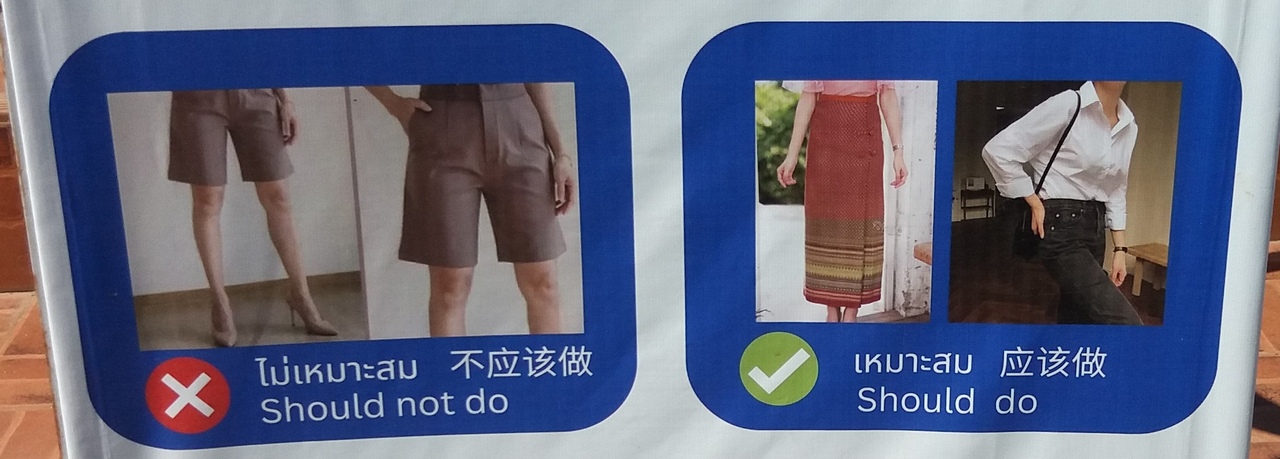
Yes, a visit to any Buddhist temple requires appropriate clothing. This applies to both men and women. It is recommended to wear clothing that covers your shoulders and knees. Short- and long-sleeved shirts, long pants, skirts, and dresses are best. You should avoid wearing tank tops, vests, shorts, mini skirts, etc. It is also good if your clothes are not made of see-through materials and do not have holes.
Attractions near Wat Phra That Lampang Luang
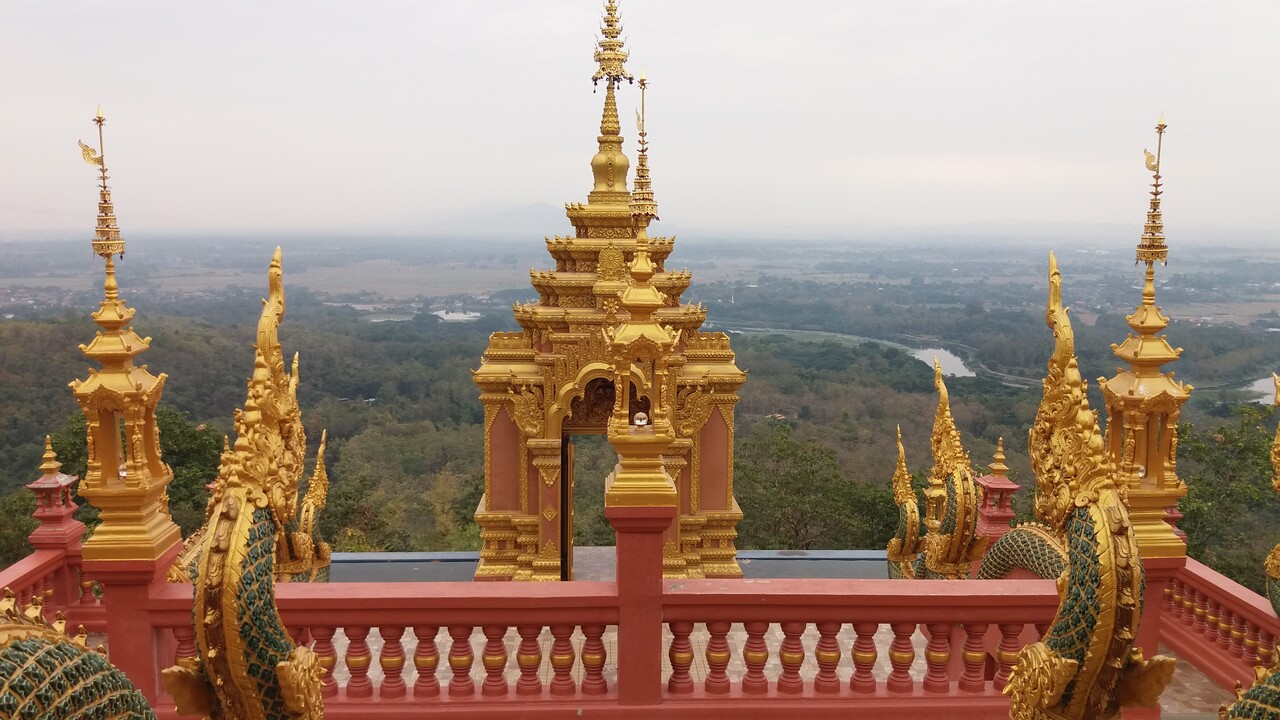
About 23 km to the south is another beautiful attraction in Lampang Province. It is Wat Phra That Doi Phra Chan, one of the most important places to visit in the region.
To the north, over 21 km away, is Thung Kwian Market, and a little further is the famous Thai Elephant Conservation Center.
Wat Phra That Lampang Luang – summary

The temple is a must-see place in Lampang Province. This tourist attraction impresses with its history and architecture. Thanks to this, in Wat Phra That Lampang Luang, you can visit the monuments and at the same time learn more about the rich history of the province. This valuable experience will certainly bring a lot of unforgettable impressions. We wish you a pleasant trip and fruitful sightseeing.